
Veja também


 25.08.2026 09:48 AM
The NZD/USD pair retreated from the highs around 0.6000 following the release of weak retail sales data for the second quarter, which unexpectedly decreased by 0.5%. However, the fundamental picture remains complex: the decline in retail demand is primarily driven by a fuel shock rather than a collapse in domestic consumption, while the market is almost fully pricing in an Reserve Bank of New Zealand rate hike on September 2. Brent crude oil continues to hold above $91 per barrel amid escalating tensions in the Persian Gulf, which continue to pose inflationary risks.
Data from Statistics NZ, published on August 24, showed an unexpected 0.5% decrease in retail sales in the second quarter, marking the first quarterly decline in nearly two years. However, it is important to understand the structure of this decline, which is primarily driven by a 13% decrease in fuel sales (as drivers cut back) and a drop in tourist traffic.
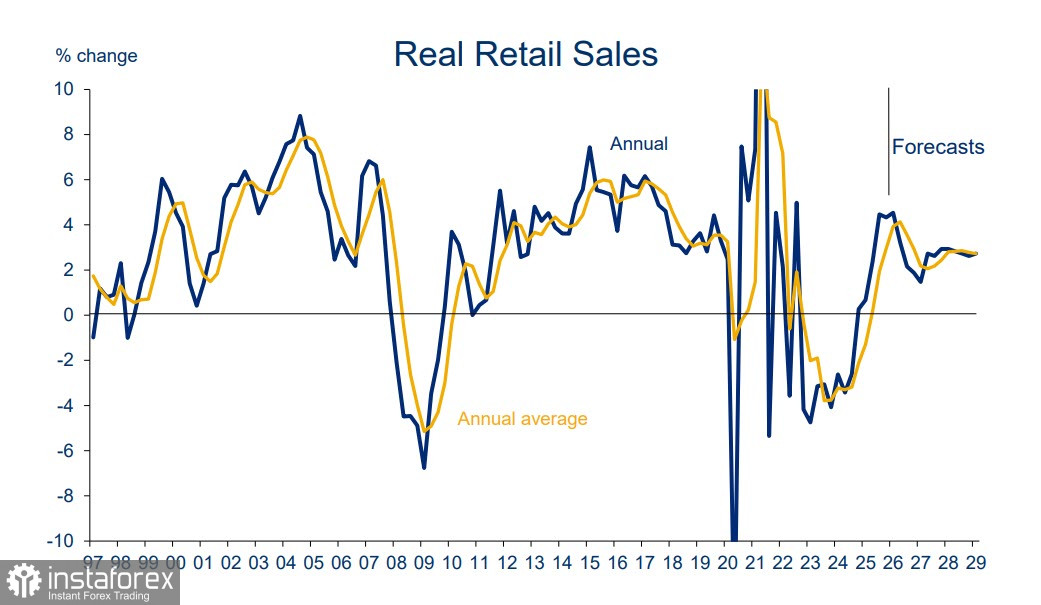
This decline (in gasoline and tourists) was anticipated, though it was higher than forecast; nonetheless, the continued growth in key categories (excluding fuel and vehicles) indicates that domestic demand retains some resilience.
The situation in the Persian Gulf remains critical for the New Zealand economy. Brent oil continues to trade above $91 per barrel, with transit effectively blocked. Iran has threatened that "not a single drop of oil will be exported, neither through the Strait of Hormuz nor from any point in the Persian Gulf," while the U.S. imposes new sanctions against Iran. For New Zealand, which relies on imports for 60% of its fuel via this route, the consequences are clear—the trade deficit in July rose to $1.9 billion, largely due to a 127% increase in oil import costs.
Despite weak retail sales, the market is pricing in nearly a 95% chance of a 25 bp hike in the OCR to 2.75% at the meeting on September 2. Inflation remains above the target, with the annual CPI at 4.1%, significantly exceeding the target range of 1-3%, while inflation expectations remain high and the fuel shock continues. According to the RBNZ, the neutral OCR level is in the range of 2.20%-4.10%, and the current rate of 2.50% is at the lower bound, leaving room for tightening.
Speculative positioning continues to shift in favor of the kiwi, with the net short position decreasing to -1.82 billion over the reporting week, suggesting further growth for NZD/USD.
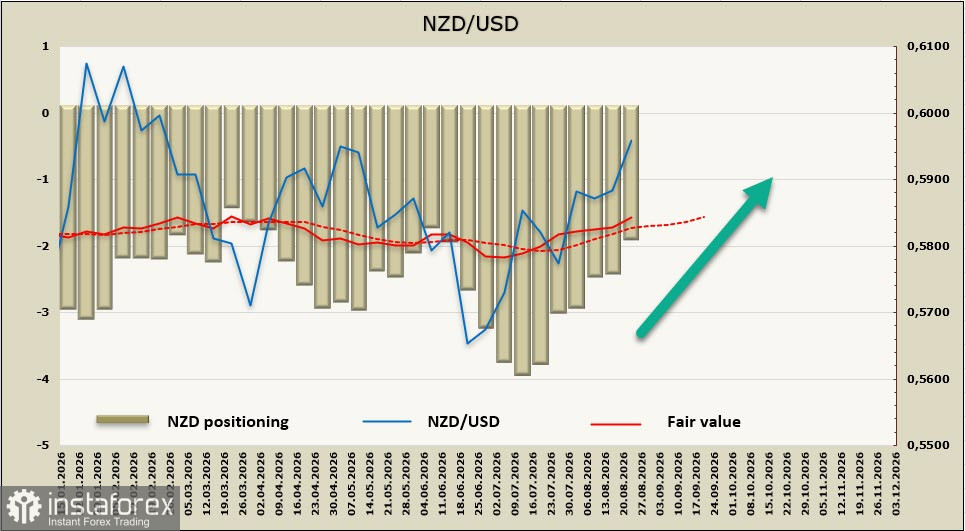
Last week, we saw growth potential towards the resistance level of 0.5985/90; this target has been reached, and bulls are gathering strength for a final push. We expect the upward movement to continue, with the next target being the yearly high of 0.6088. The familiar risks remain: increased demand for the dollar as a safe haven amid escalating geopolitical threats, as well as Warsh's speech at Jackson Hole, which could turn hawkish and shift the focus of rate forecasts for the Federal Reserve. In this scenario, the kiwi could drop to 0.5845 (200-period SMA), but we consider it unlikely.


