
Veja também


 24.12.2025 12:32 AM
The publication of the Reserve Bank of Australia's December 9 meeting minutes has bolstered bulls' confidence. The Monetary Policy Council, commenting on trends in the global economy, noted that while yields on US government bonds are declining, they are rising in some countries, including Australia. Council members stated that the increase in short-term bond yields in Australia aligned with market participants' expectations of both tighter monetary policy and higher short-term inflation.
The minutes turned out to be even more hawkish than the RBA's accompanying statement after the meeting. The emphasis was placed on the exacerbation of inflationary pressures, including factors contributing to this increase, particularly the rise in labor costs above forecasts and difficulties in attracting labor due to increased capacity utilization, which is also driving wage growth.
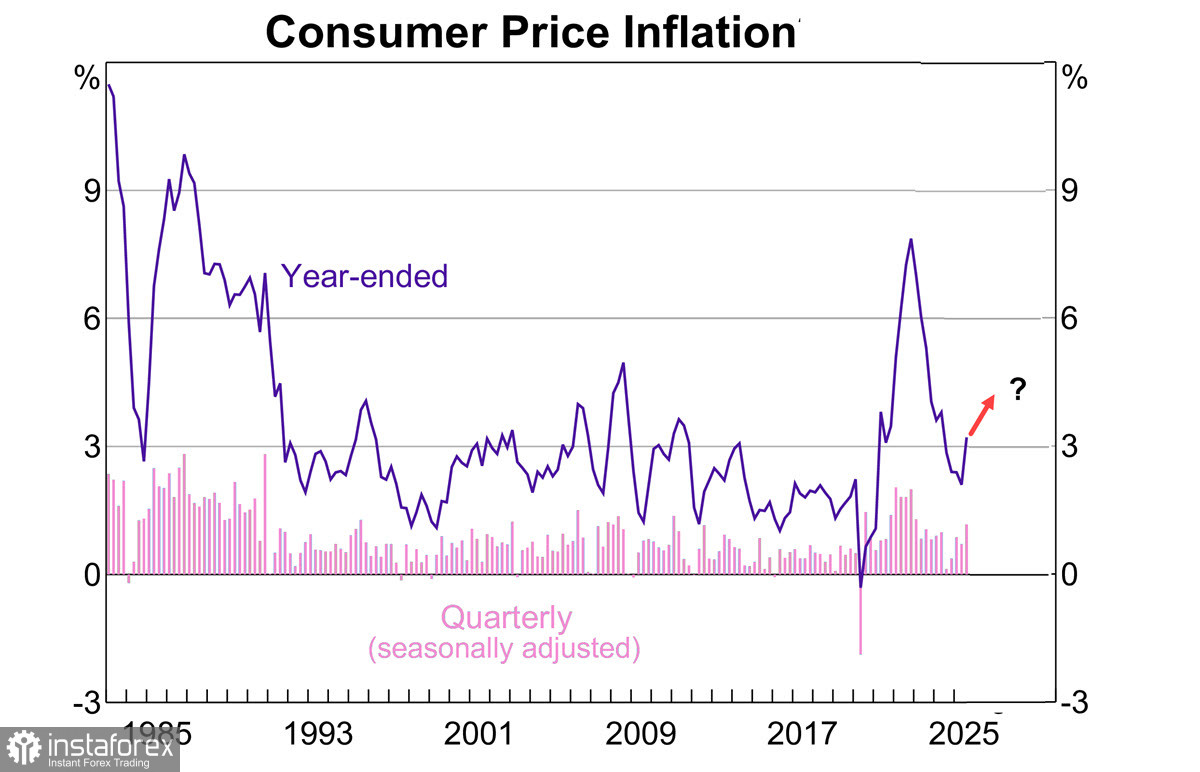
Now, until January 7, when the next Australian inflation indicator for November is published, there will be crucial data that could alter perceptions of the Australian currency. The December PMI indices, which will be released the day before, are unlikely to have a significant impact on quotes, whereas inflation could very well do so. Inflation has risen from a low of 1.9% in June to 3.8% in October, and continued growth will force the RBA to regard the threat of renewed price increases with utmost seriousness. This, in turn, would mean a revision of rate projections in favor of an earlier start to the tightening cycle. The risk of such a revision will be bullish for the Aussie and further promote its growth.
As for the US dollar, its market perception has significantly deteriorated. The dollar's decline resembles a major crash, especially given that it occurred the day before the holidays, when such strong movements are typically absent due to reduced trading activity. Since no new data have emerged that could have provoked such a sharp decline, we appear to be witnessing a delayed market reaction to revised Federal Reserve rate forecasts. While markets are turning towards expectations of rate increases for the Yen, Australian, and New Zealand dollars, the Euro market is already confident that the easing cycle has ended. Amid this context, the pressure on the Fed to cut rates more quickly is a clear, evident, and powerful factor contributing to the dollar's weakness in the near future.
The projected price is moving sharply upwards, indicative of strong bullish momentum.
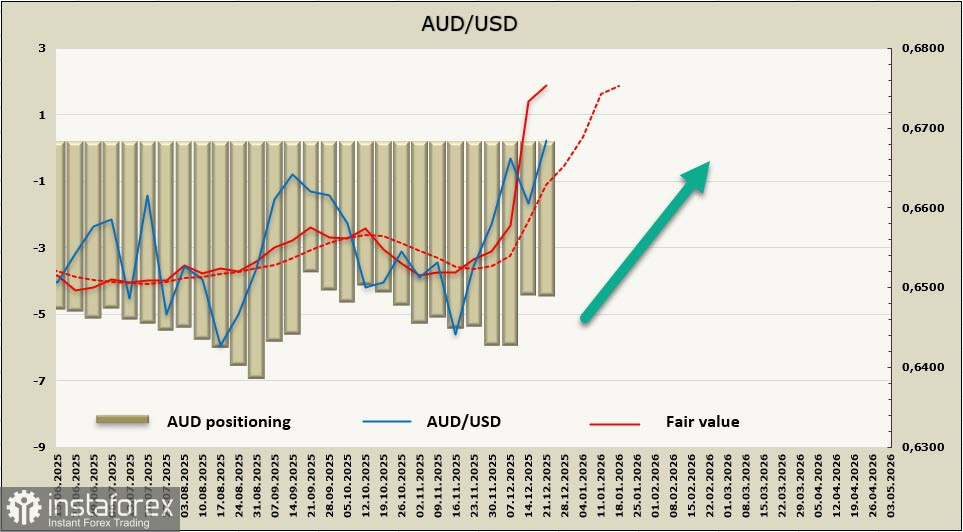
Last week, we anticipated that the bullish momentum was strong enough to reach the 0.6710 resistance level and stay above it. Indeed, the correction proved shallow, and as the new week began, AUD/USD growth resumed sharply, with the pair now just a step away from 0.6710. We expect the growth to continue towards 0.6950, but it is unlikely that this target will be reached by the end of the year, considering the thin market and overall decline in activity.


