
Vea también


 24.06.2026 12:45 AM
Last week, the Bank of England (BoE) unsurprisingly maintained the key interest rate at 3.75%, making this decision by a majority vote (7 to 2). This wait-and-see position, despite weak demand and inflation-related risks, appears somewhat unstable yet balanced for the time being.
The main determinant for the BoE remains the dynamics of global energy markets. If oil prices stabilize at current levels, the inflation threat will diminish, allowing the BoE to keep the rate unchanged until the end of the year. However, a renewed rise in oil prices is likely to trigger one or possibly two rate hikes. It is certain that there are currently no reasons to lower the rate.
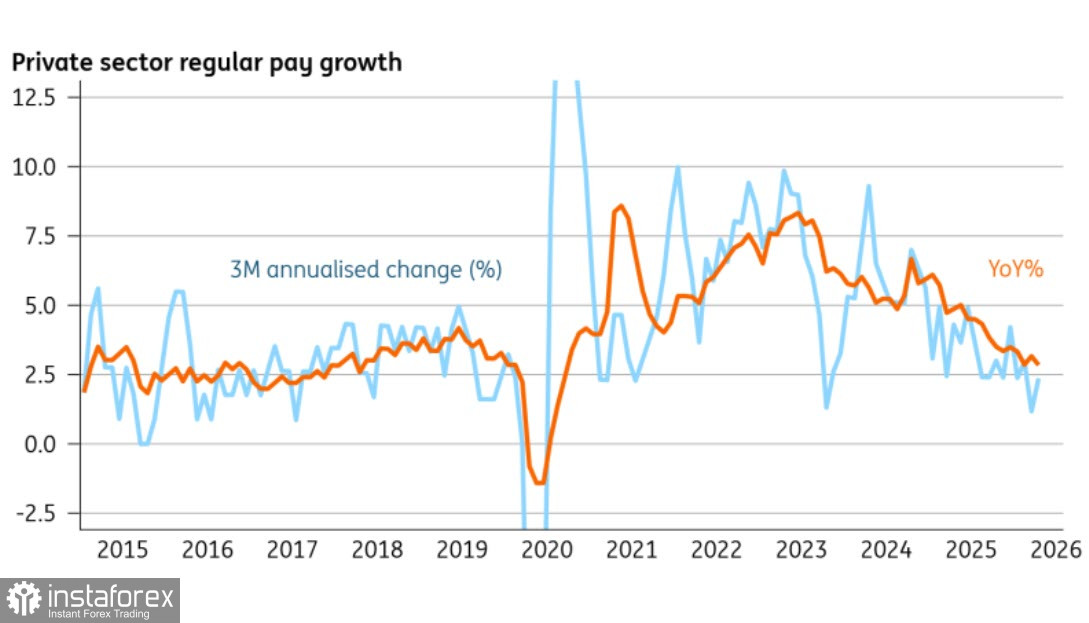
The labor market report released just before the meeting showed mixed results. Despite some positive figures, the overall picture remains weak. Sustainable wage growth is observed only in the public sector, while in the private sector, it has declined to below 3% year-on-year. This is a significant achievement compared to 5.2% a year earlier, indicating a weakening of inflationary pressure from the private sector.
Economic prospects remain gloomy. The services PMI index in June slowed to 48.7 points, and the composite index fell even lower, into contraction territory at 49.5 points. The balance of risks still lacks a clear resolution. The BoE forecasts inflation above 3% until the end of the year, and a rate cut is not being considered. However, if economic activity continues to slow, the opportunity for a rate hike will also be lost. Currently, markets expect a rate increase of about 30 basis points by the end of the year. But if oil prices remain relatively stable, these expectations will decrease, putting additional pressure on the pound.
Thus, the situation returns to the Strait of Hormuz and the fulfillment of agreements between the U.S. and Iran. The UK, as a net importer of energy resources, must wait for developments and adjust its monetary policy accordingly.
Some support for the pound could come from Prime Minister Starmer's resignation. Indeed, the pound reacted positively to this event, attempting to recover some of its losses, but quickly lost its momentum. The economic situation remains challenging and largely depends on external factors.
The net short position on GBP has slightly increased to £6 billion, and the calculated price remains below the long-term average.
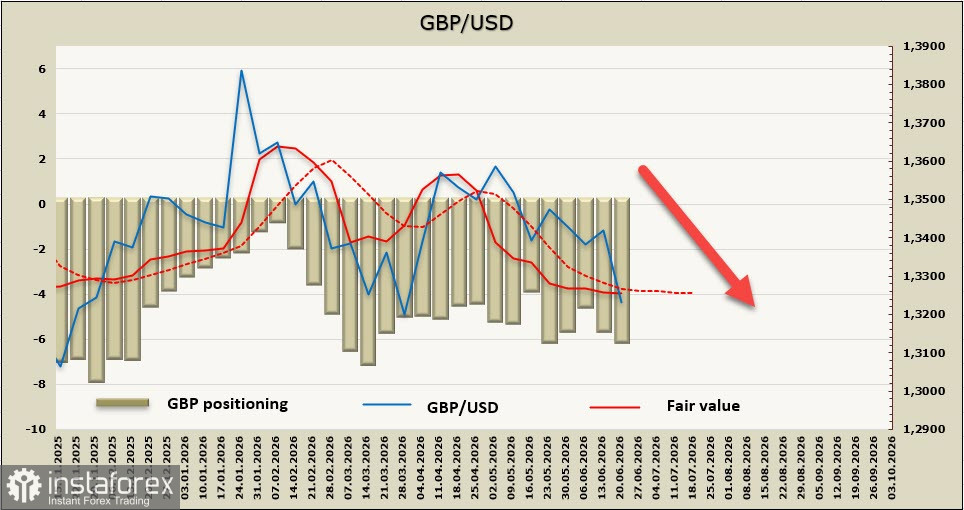
A week earlier, we predicted a decline in the pound below the support zone of 1.3299/3305 if the fundamental factors proved unfavorable. This is precisely what happened: the outcomes from the Federal Reserve meeting were more "hawkish" than the market expected, the May rise in retail sales amplified inflationary fears, and PMI indices continue to decline. As a result, the pound fell to the next support level of 1.3158, and it is likely that this is not the limit. The short-term bullish momentum for the U.S. dollar has not yet been exhausted, and a drop to the next support zone around 1.3000/30 is possible. There are virtually no grounds for an upward reversal.


