
Vea también


 11.08.2026 12:09 AM
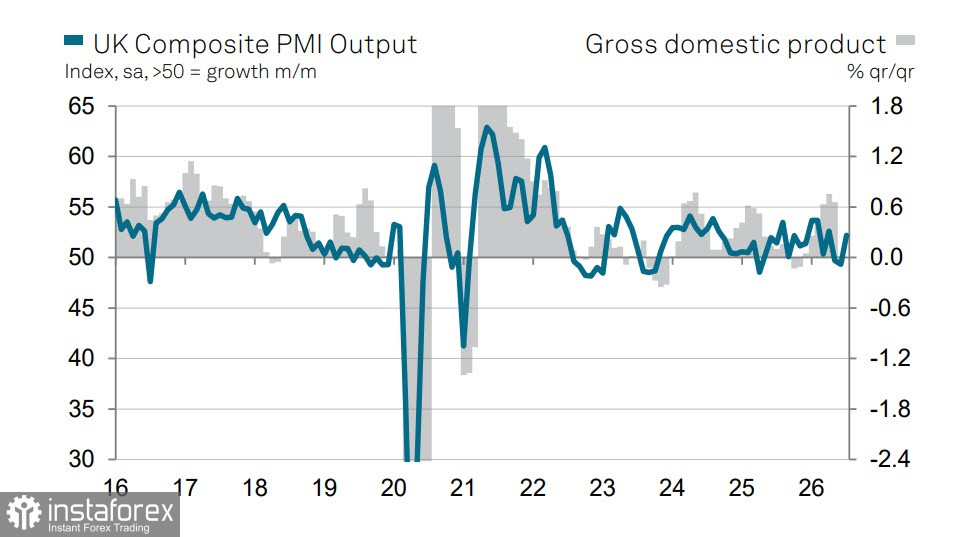
August data on business activity indexes released by S&P Global slightly disappointed. The composite PMI declined to 52.2 from 52.8 in the previous month, while the services PMI fell to 52.1. Although both indicators remain above the 50 mark, which separates expansion from contraction, the British economy is still struggling to gain sustainable momentum.
For the Bank of England, the trend is more likely towards maintaining the rate at current levels until the end of the year. The weak non-farm payrolls report released on Friday reduced the probability of a Federal Reserve rate hike in September, ultimately increasing uncertainty about the future trajectory of the yield differential.
The Iranian parliament is considering a plan that could radically change global energy flows: a ban on vessels from the US, Israel, and other "hostile" countries passing through the Strait of Hormuz, as well as the introduction of fees of up to 7% of the cargo value for commercial ships and fines of 20% for violations of these terms.
For the pound, such developments will have negative consequences, particularly increasing the threat of high inflation due to rising energy prices and heightened demand for the dollar as a safe-haven currency.
NIESR forecasts indicate that the British economy faces a protracted inflation shock. Even in the optimistic scenario, inflation will remain above 3%, leaving the BoE with no room to cut rates. The UK's GDP growth in the second quarter, according to NIESR estimates, is fragile, and any new shocks could undermine the recovery.
A survey of 25 major banks shows a range of forecasts for GBP/USD in Q3 2026 from 1.30 to 1.38, with a median of 1.33, suggesting some decline from current levels around 1.35.
The key event of the week will be the US inflation data on August 12. If the CPI shows a slowdown, expectations for a Fed hike will continue to decline, which could support the pound. However, the factor of the Strait of Hormuz remains dominant. Any tightening of Iran's position will trigger a new spike in oil prices, which, on the one hand, will heighten inflation expectations and may push the BoE towards hawkish actions (supporting the pound), but on the other hand, will strengthen the dollar as a "safe haven" (pressuring the pound).
The net effect is likely to be neutral or slightly negative for GBP/USD, as the dollar retains its structural advantage. The net short position on GBP for the reporting week slightly decreased to -$4.9 billion; speculative positioning is bearish, but the calculated price has lost direction.
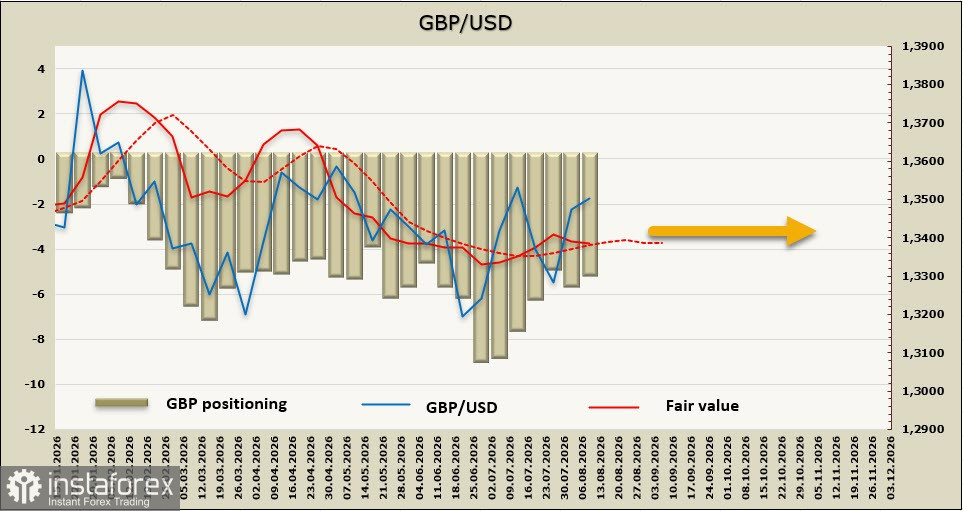
The most likely scenario for GBP/USD in the coming week appears to be consolidation within the 1.3400–1.3550 range, with attempts to test the upper boundary if US data is weak. If tensions in the Strait of Hormuz escalate again and oil prices rise above $90, demand for the dollar as a safe haven will increase, and the pound could drop to 1.3300 or lower.
A bullish scenario under current conditions seems unlikely. The pound remains trapped between a weakening domestic economy and geopolitical risks, with US strategic dynamics in the Strait of Hormuz working against it in the long term.


