
Lihat juga


 03.03.2026 08:36 PM
The EUR/USD pair collapsed on Monday amid the U.S. and Israeli military campaign against Iran and continued declining on Tuesday. I would rather not list all the countries that have already entered into open military conflict or all the infrastructure facilities that have been struck over the weekend and the beginning of the week. What matters to traders is the essence of what is happening. A new war has begun in the Middle East, and this time it risks becoming prolonged.
How is this war affecting the markets? Oil and gas prices are rising rapidly due to the blockade of the Strait of Hormuz and a series of Iranian strikes on oil production and refining facilities in U.S.-allied countries. Demand for the dollar is growing at the same pace as oil prices, as investors are fleeing from risky assets into safe-haven assets. There is nothing more to add here.
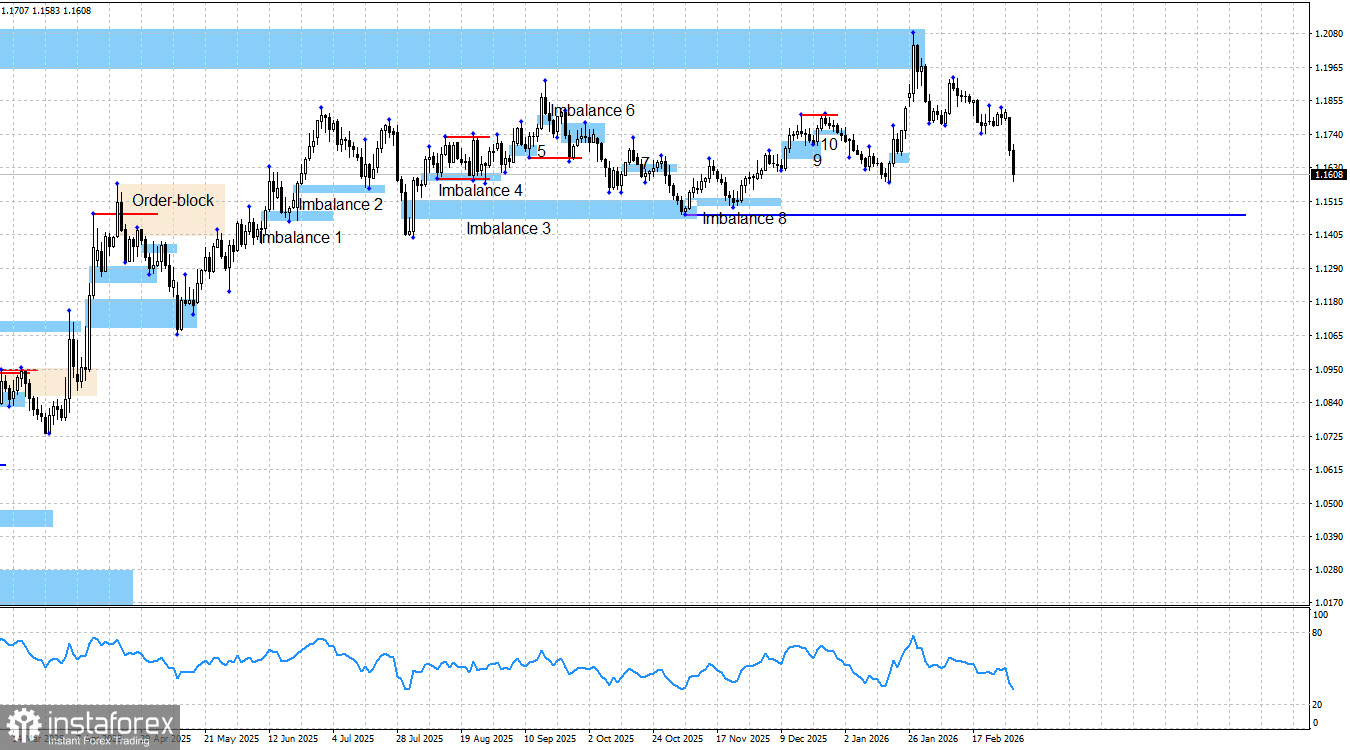
Because of geopolitical events, the technical picture has been disrupted—if not completely, then at least partially. We have witnessed an open confrontation between the technical setup and the news background. This time, the news background proved stronger. Therefore, under current conditions, traders need at a minimum to wait for the formation of new patterns and only then analyze the overall picture and assess the current news environment. In my view, the bulls had strong chances of continuing the trend until the very end, but the war in the Middle East has turned everything upside down. Now it is important to understand where the current dollar growth will end and whether the bullish trend will remain intact.
At the moment, there are no active patterns—neither bullish nor bearish. Imbalance 12 has been invalidated, as I had anticipated. After such a sharp drop in the euro on Monday and Tuesday, bearish imbalances will form, but for them to appear, the price needs at least a slight upward pullback. At present, there is no sign of a pullback. The collapse of quotes continues.
Even if bearish patterns are formed, it is important to understand whether the bullish trend will still be relevant by then. If not, bearish patterns will take on a completely different, more favorable meaning for traders. At the same time, the pair's collapse driven by geopolitics may be an extraordinary event. If the war in the Middle East ends in the near future, bulls may just as swiftly go on the offensive and invalidate all bearish patterns formed by that time.
The technical picture still signals bullish dominance. The bullish trend remains intact; however, the bullish scenario has been postponed for an indefinite period. To once again count on euro growth, new bullish patterns are required. To anticipate further declines, bearish patterns and signals are needed. At present, there are neither.
The news background on Tuesday was essentially absent for traders, as the panic-driven decline continued, rooted in geopolitics. In the European Union, a February inflation report was released, showing an acceleration to 1.9%. Core inflation rose to 2.4%. However, these data attracted no interest, although they could have supported the bulls.
In recent months, the bulls have had a huge number of reasons to attack, and even with the outbreak of war in the Middle East, those reasons have not diminished. Structurally and globally, Trump's policies—which led to a significant dollar decline last year—have not changed. In the near term, the U.S. currency may continue to rise amid investor flight from risk, but this factor will not be able to support it for long.
Meanwhile, the dovish monetary policy outlook of the FOMC, Trump's trade war with the entire world, the weakness of the U.S. labor market, two government shutdowns, U.S. military aggression, criminal proceedings against Powell, slowing GDP growth, and other unfavorable developments for America are not canceled out by the conflict in Iran.
I still do not believe in a bearish trend. The dollar has received temporary market support, but it is far from certain that this situation will last long. The blue line indicates the price level below which the bullish trend can be considered over. Bears need to push the price down about 140 points to reach it, and even if they succeed, I would still question the emergence of a bearish trend. In my view, the pair is showing a strong decline solely due to geopolitics. When that factor fades, what will the bears rely on to attack? Bearish patterns may form this week, which would make the local picture easier to analyze and forecast.
News calendar for the U.S. and the Eurozone:
On March 4, the economic calendar contains three notable entries, but once again the economy may remain overshadowed by geopolitics. The news background will certainly continue to influence market sentiment on Wednesday.
EUR/USD forecast and trader advice:
In my view, the pair remains in the stage of forming a bullish trend. The news background shifted sharply over the past weekend, but the trend itself remains intact. Therefore, traders need new patterns in the near term to form short-term forecasts. If these are bearish patterns (which is more likely), it is important to remember that the overall trend remains bullish and that geopolitics typically does not have a long-term impact. If bullish patterns appear (which would be far preferable), traders will have the opportunity to open new long positions in line with the prevailing trend.


