
یہ بھی دیکھیں


 24.06.2026 03:50 PM
Consumer inflation in Australia slowed in May to 4.0% year-on-year, which turned out to be a surprise as forecasts had pointed to 4.4%. At the same time, core inflation, calculated using the trimmed mean method, rose from 3.4% year-on-year to 3.6%, which was also unexpected.
The 3.6% reading is the highest trimmed-mean inflation rate in the still short history of monthly statistics and exceeds the RBA's 2–3% target range.
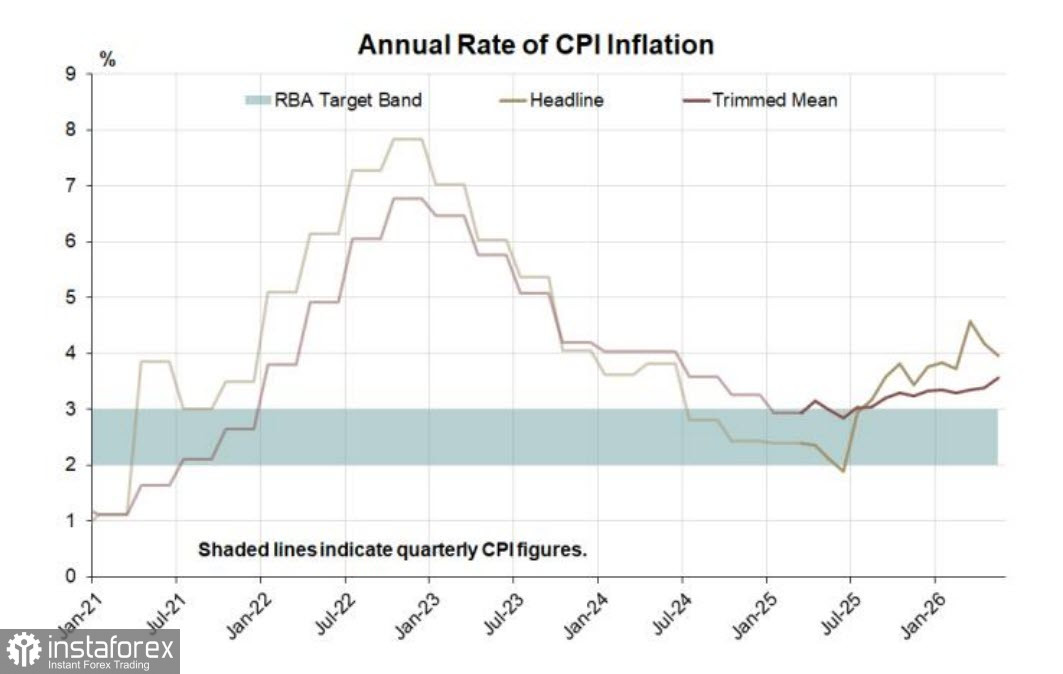
The drop in headline inflation in May was mainly driven by cheaper motor fuel after cuts to the fuel excise and by the stabilization of world oil prices amid events in the Middle East. Although the RBA focuses on quarterly inflation measures (the trimmed mean), the unexpectedly strong rise in trimmed-mean inflation in May points to upside risks to quarterly outcomes and does not rule out further rate increases. The RBA is actively fighting inflation and already raised the cash rate in May to 4.35%, the highest since December 2024.
June business activity indices were slightly above May's, which could be read as positive, except that the composite index was only 49.8 points, below the expansion threshold. Thus, the threat of recession remains relevant. A labor market report is due on Thursday. Employment fell by 18,600 in April, and forecasts point to a 35,000 increase in May, which should offset the April decline. If the gain is smaller, the report will be another factor in favor of a developing recession. A strong print would increase the probability that the RBA will raise the rate again at the August meeting, while weak figures would argue for holding the rate steady.
Meanwhile, the US dollar continues to strengthen sharply, and it appears that this is not solely because the Fed showed a hawkish tilt last week. Risk appetite is falling despite a memorandum between the US and Iran, the stabilization of oil prices, and attempts to open the Strait of Hormuz imminently. The yen and the Swiss franc are also strengthening alongside the dollar, while equity indices are declining. The US Senate passed a resolution limiting President Trump's authority to resume military action against Iran without congressional approval, reflecting growing bipartisan skepticism about the administration's regional policy. Overall uncertainty remains high.
Speculative positioning on the AUD has deteriorated for the fifth consecutive week; for the first time in 21 weeks a short position has formed, and the implied price is falling steadily.
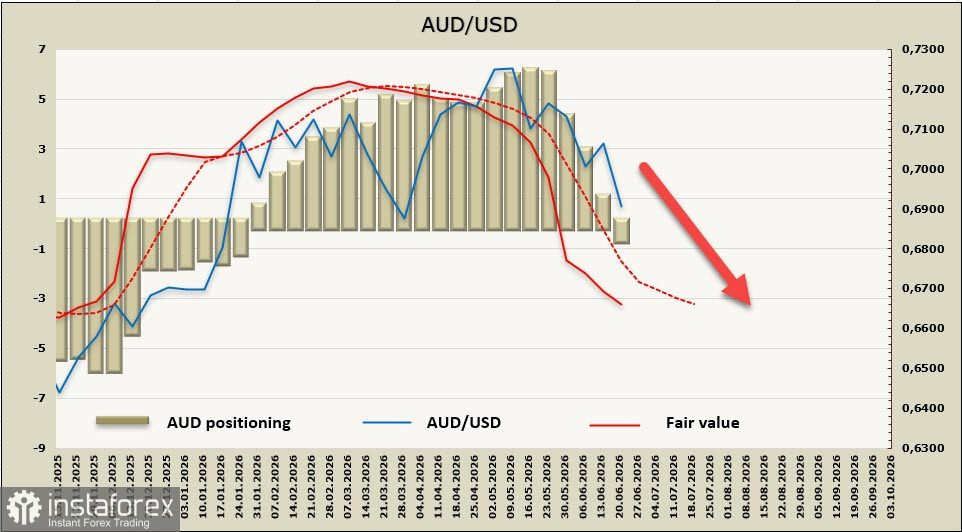
In the previous note, we highlighted growing bearish sentiment on the Australian dollar. AUD/USD plunged below support at 0.6982 and reached the lower boundary of the bullish channel at 0.6900. Bulls may try to defend that level and engineer a technical retracement, but further downside toward 0.6835 looks more likely. That is an important technical line, and if it does not hold, a bearish reversal will form on the daily chart.


