
আরও দেখুন


 18.03.2026 08:37 PM
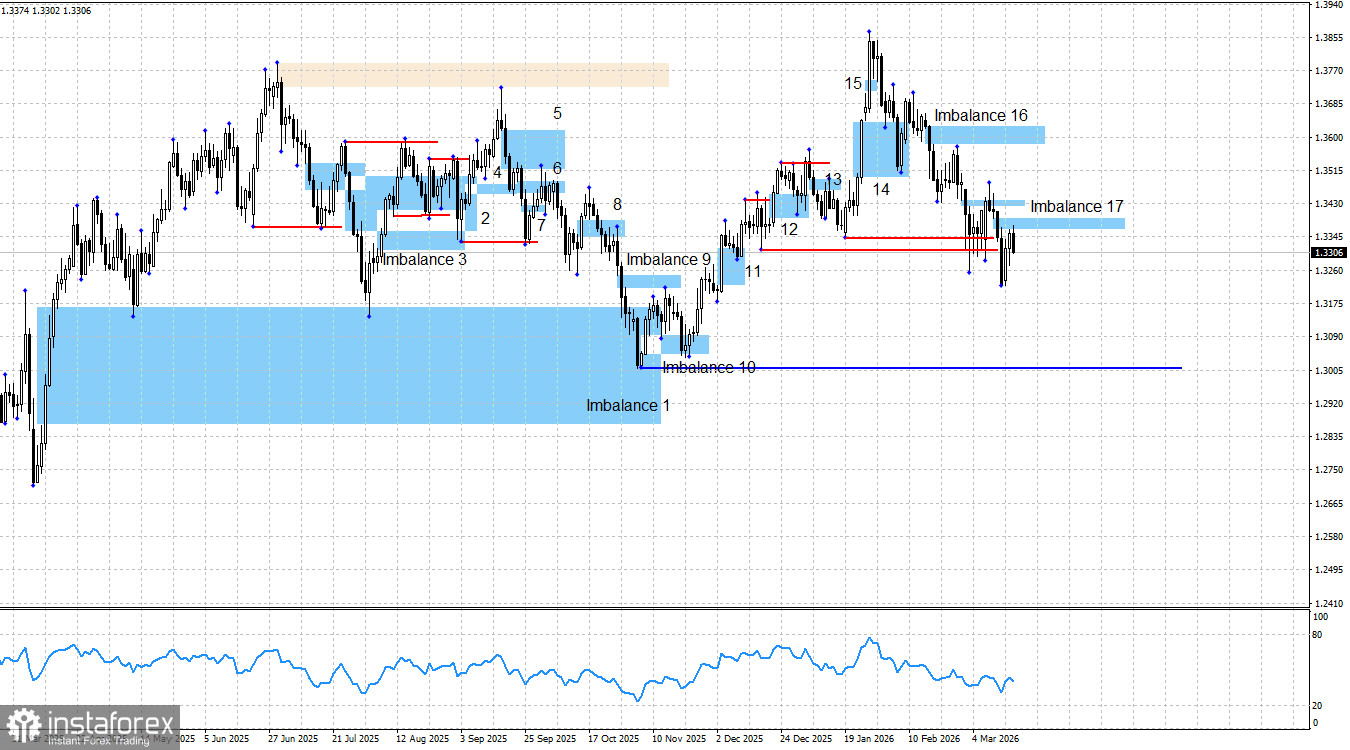
The GBP/USD pair reversed in an imbalance zone without a numerical designation and resumed its decline without any clear target. Last week, another bearish imbalance was formed, which may trigger a price reaction and a new sell signal as early as today. A similar pattern exists for EUR/USD, so it is still too early to talk about the end of the bearish move. I would even say the opposite: the bulls' position remains unfavorable. To expect a new wave of a bullish trend, at a minimum, the invalidation of imbalance 17 is required. As of now, we are seeing a rejection from this pattern. Ahead is the Fed meeting, so the pound may show strong growth before the end of the day. However, at this moment, the chart still looks like a continuation of the bearish move.
There has been no open escalation of the Middle East conflict this week, but the overall situation has not improved. Iran continues to block the Strait of Hormuz, Gulf states continue to exchange missile and drone strikes, Donald Trump is demanding support in the Middle East from EU countries, and EU nations are urgently trying to resolve the emerging energy crisis on their own. In reality, discussing when the Middle East war will end no longer makes much sense, just as listing all military operations and attacks does not. What matters now is waiting for real de-escalation, peace negotiations, the reopening of the Strait of Hormuz, restoration of energy infrastructure in the region, and stabilization of oil and gas prices.
At present, there are no bullish patterns, but a new sell signal may form today in imbalance 17. The euro also has a similar imbalance, so for the second time in a row, the euro and the pound may generate identical trading signals. The probability of further declines in both pairs remains quite high. Any discussion about a possible bullish advance at this stage is merely speculation without confirmation.
The bullish trend for the pound remains intact. As long as it holds (above the 1.3012 level), more attention should be given to bullish signals. However, there are currently no bullish patterns or signals, while geopolitics continues to weigh heavily on both the euro and the pound.
The news background on Tuesday again supported the bears, as the U.S. Producer Price Index exceeded forecasts for the fourth consecutive month. If producers are raising prices, retailers are likely to follow, which threatens a new wave of inflation and the continuation of the Fed's current monetary policy throughout 2026.
In the U.S., the overall information backdrop suggests that, in the long term, little can be expected other than a decline of the dollar. The war between Iran and the U.S. has not significantly changed this outlook. The situation for the dollar remains challenging in the long term but highly favorable in the short term. U.S. labor market data continues to disappoint more often than it improves. Trump's military actions, threats toward Denmark, Mexico, Cuba, Colombia, EU countries, Canada, and South Korea, the criminal case against Jerome Powell, government shutdowns, the Epstein-related scandal involving U.S. elites, a possible impeachment of Trump by year-end, and likely electoral losses for Republicans all contribute to the broader picture of political and structural instability in the United States. In my view, bulls have all the necessary conditions to resume their advance in 2026, but at present, traders are fully focused on geopolitics and the energy crisis.
A sustained bearish trend would require a strong and stable positive information backdrop for the dollar, which is difficult to expect under Donald Trump and unlikely to be provided by geopolitics alone. That said, nothing can be ruled out. If a broader global conflict were to emerge and spread beyond the Middle East into Eurasia, the dollar could strengthen significantly and for a prolonged period. However, I remain cautiously optimistic that this will not happen. In that case, the dollar's upward potential remains limited by negative developments in the Middle East.
Economic calendar for the U.S. and the United Kingdom:
On March 18, the economic calendar includes seven events, all UK-related ones being significant. The news flow may strongly influence market sentiment throughout Thursday.
GBP/USD Forecast and Trading Advice:
The long-term outlook for the pound remains bullish. However, there are currently no active bullish patterns, only a new bearish imbalance 17, which may generate a sell signal today. The recent sharp decline in the pound over the past few weeks was largely due to a series of unfavorable events. Without Trump's repeated threats toward Iran, the deployment of military assets to the Persian Gulf, and the subsequent outbreak of war, such a strong rise in the dollar would likely not have occurred. I believe this decline could end as suddenly as it began. However, for now, it continues. If new signals emerge, the pound may continue to fall toward the 1.3000–1.3100 level.


