
यह भी देखें


 11.05.2026 12:52 AM
The European currency enters a new week in a positive mood. The war in the Middle East has not resumed; several unfortunate incidents last week in the Persian Gulf did not have any consequences, and unofficial negotiations between Tehran and Washington continue. Certainly, if we look at the "bare" facts rather than rumors and "insider" information, the picture remains unflattering. The Strait of Hormuz remains closed, and the outcome of the negotiations between Iran and the US is uncertain. However, it's worth noting that active buying of the dollar began about 2-3 weeks before the outbreak of the war in the Middle East. This means the market was already pricing in the rumors and expectations.
Therefore, it is also currently engaged in pricing in rumors, expectations, and "insider" news. Personally, I do not trust various insiders without indication of information sources, but I am willing to acknowledge that market participants exhibit a measured belief in them. Consequently, if next week there isn't a "thunderclap out of a clear sky," the rise of the European currency will continue. Friday showed that the market remains uninterested in economic data—the important Nonfarm Payrolls report was ignored. If the economy does not interest the market, what else might catch its attention? Geopolitics.
Accordingly, this week I expect the euro to rise to the area of the 19 figure. A gain of 110 pips over the week is not too much, even with moderate market activity. We can only discuss the economic background in a formal context. I am virtually certain that key European reports and events will not elicit any market reaction. For instance, consider the two speeches by European Central Bank President Christine Lagarde. Since the ECB's April meeting, Lagarde has given at least five interviews, but none have contained anything significant for traders. The ECB remains prepared to tighten monetary policy if inflation continues to accelerate. However, the ECB wants to ensure that the conflict in the Middle East will not be resolved soon, which would lead to a "natural" deceleration of consumer prices as oil and fuel prices begin to decline.
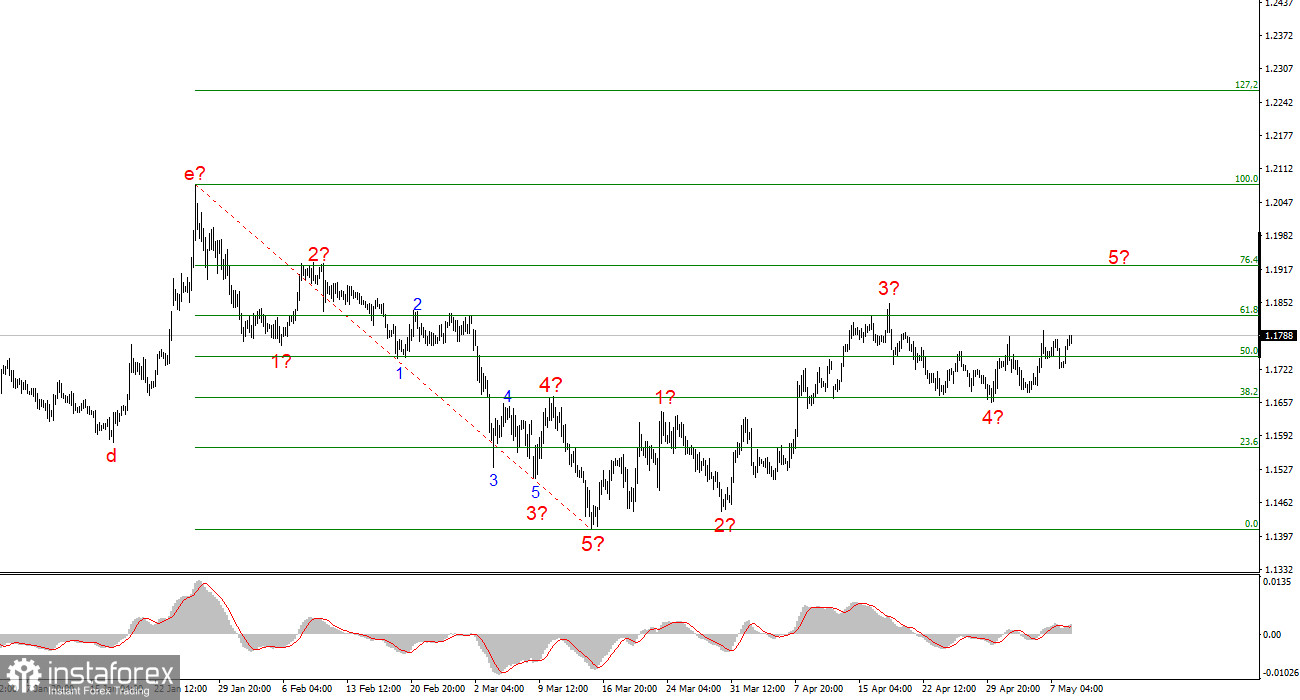
From the economic reports, I would highlight inflation in Germany, the ZEW Economic Sentiment Index, industrial production in the EU, and the first quarter GDP in its second estimate. However, I would reiterate that, in my opinion, this data will not affect the trading of the EUR/USD instrument. The wave count at this time does not allow for multiple interpretations.
Based on the analysis of EUR/USD, I conclude that the instrument remains within the upward segment of the trend (as illustrated in the lower image) and, in the short term, is within a corrective structure. The corrective wave set appears quite complete and may take on a more complex, elongated form. The geopolitical backdrop in the Middle East continues to improve, which is driving buyer optimism. I expect a new upward movement from current levels, targeting around the 19 figure.
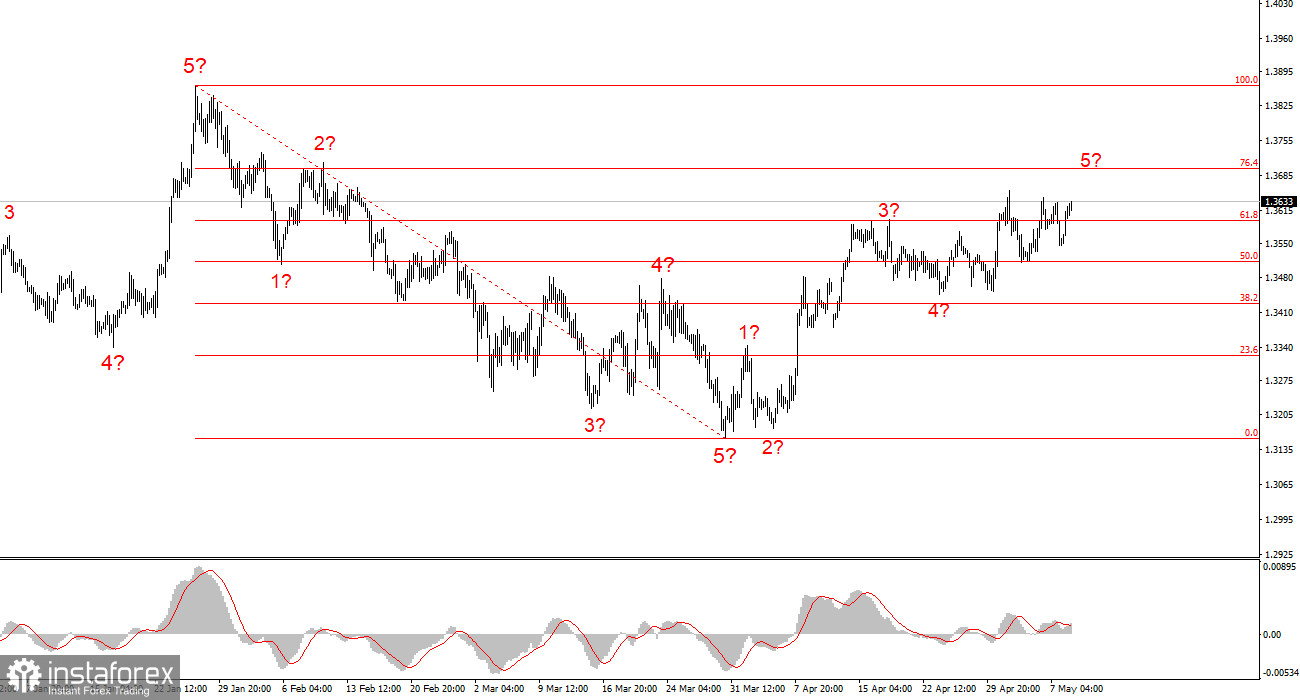
The wave picture of the GBP/USD instrument has become clearer over time, as I had predicted. Now we see a clear five-wave upward structure on the charts that may soon be completed. If this is indeed the case, we should expect the formation of a corrective wave set after the completion of wave 5. Wave 5 could be completed around the 1.3699 level, which corresponds to 76.4% on the Fibonacci scale. If geopolitical developments continue toward long-term peace, the upward segment of the trend may take on a more extended form. Thus, the combination of waves and geopolitical factors will determine the British pound's fate in the coming weeks.

