
यह भी देखें


 11.05.2026 06:53 PM
The EUR/USD pair reversed in favor of the euro and began a new upward movement. Unfortunately, this occurred without testing the nearest bullish pattern. However, after zooming in and taking a closer look at the chart, I identified another pattern that had previously gone unnoticed due to weak price action. That pattern is an order block. Therefore, a bullish pattern and a bullish signal were indeed formed before the euro resumed its rise.
At the moment, this upward move remains relatively weak, although I had previously expected further euro growth even without the order block. In recent weeks, there have been plenty of buy signals for both the euro and the pound. At the same time, the market continues to radiate optimism in anticipation of an end to the war in the Middle East — so much so that it is ignoring positive U.S. labor market and unemployment data, renewed attacks involving Iran, the U.S., and their allies, as well as another failed round of negotiations. At the very least, we have not seen a meaningful decline in the pair over the past week, despite the lack of positive news from the Middle East.
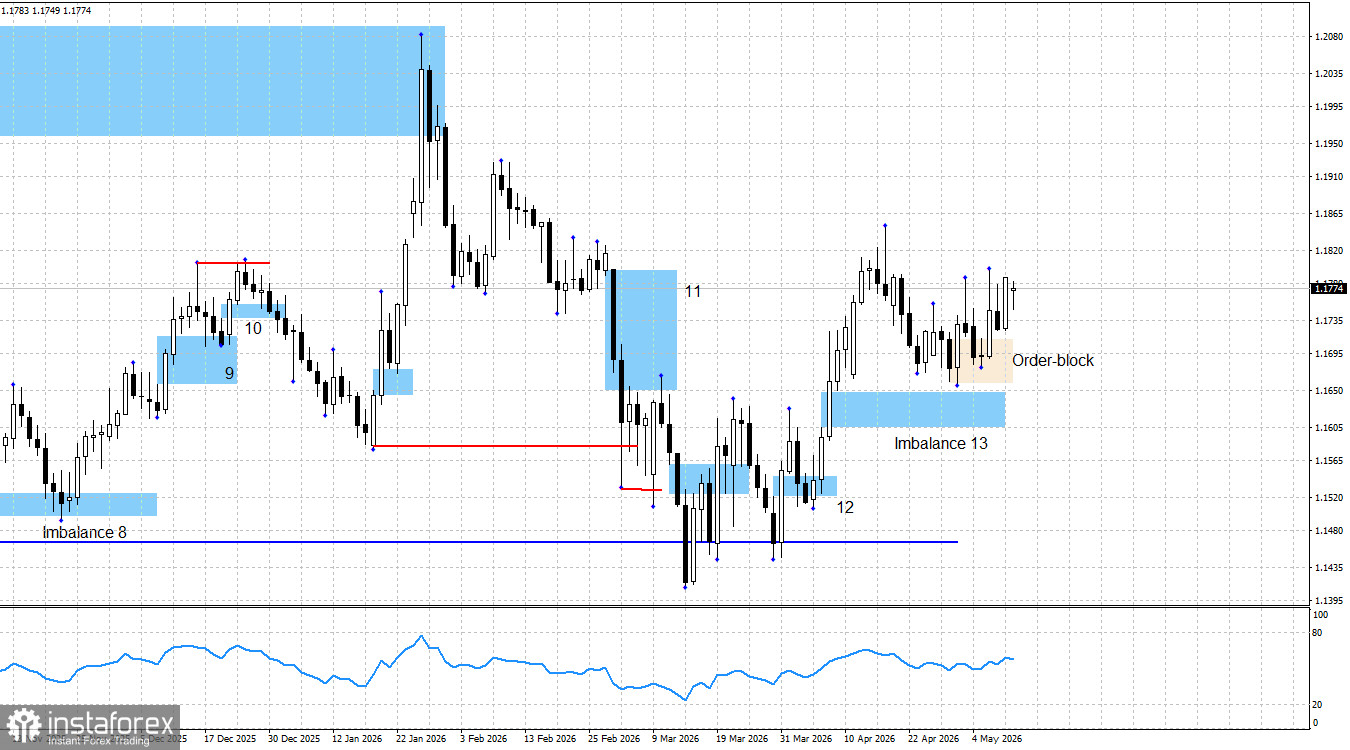
In the current situation, traders seeking to open new positions can only wait for the formation of new bullish patterns. I still consider the trend to be bullish. Last week, bulls came very close to testing imbalance level 13, but instead a bullish order block was formed following a liquidity sweep. This pattern was confirmed a few days later and provided another buy signal. At present, there are no bearish patterns whatsoever, meaning there are effectively no grounds for selling the pair, even hypothetically.
I must once again emphasize that the entire rise of the U.S. dollar between January and March was driven solely by geopolitics. As soon as the U.S. and Iran agreed to a ceasefire, the bears immediately retreated, and for more than a month the bulls have dominated the market. The ceasefire remains fragile, but negotiations are continuing and chances for peace still exist. I have repeatedly stated that I do not believe the bullish trend has ended, despite the break of important trend-defining lows and despite the war involving Iran. The market often prices in the most pessimistic scenario immediately, attempting to anticipate the most extreme outcome. Therefore, I believe traders may have already fully priced in the geopolitical conflict in the Middle East. If that is the case, the bears may have retreated for the long term.
The overall technical picture is currently very clear. The bullish advance remains intact but requires support. Ideally, that support would come from geopolitics — with Iran and the United States continuing to move toward compromise. However, even without such news support, bulls are still capable of maintaining upward pressure, although the pace of growth would likely remain moderate rather than explosive.
There was no significant economic news on Monday. In the morning, reports emerged that Tehran and Washington had once again failed to reach an agreement and rejected each other's peace proposals. As a result, negotiations will continue for an indefinite period. How they will ultimately end remains an open question. Nevertheless, the market still believes in a positive outcome — or more precisely, in peace.
There are still many reasons for bulls to remain active in 2026, and even the outbreak of war in the Middle East has not reduced them. Structurally and globally, Trump's policies — which led to a sharp decline in the dollar last year — have not changed. Over the coming months, the U.S. dollar may occasionally strengthen due to investor flight from risk, but that factor requires a constant escalation of the conflict in the Middle East. I still do not believe in the emergence of a sustained bearish trend for the euro. The dollar received temporary market support, but what could realistically fuel a long-term bearish offensive?
The economic calendar for May 12 contains three events, one of which is considered important. Therefore, market sentiment on Tuesday will likely be influenced by the news flow, especially during the second half of the day.
In my view, the pair remains in the process of forming a bullish trend. The news background shifted sharply three months ago, but the trend itself cannot yet be considered canceled or completed. Therefore, bulls may continue their advance in the near future unless geopolitics suddenly turns toward renewed escalation.
Traders previously had opportunities to open long positions based on the imbalance 12 signal as well as the order block signal. The upward movement may continue toward this year's highs. For uninterrupted euro growth, the Middle East conflict must continue moving toward lasting peace, and signs of de-escalation do occasionally appear. At the same time, bullish traders still lack sufficient momentum for a new strong impulse, though they remain capable of extending the rally even without it.

