
यह भी देखें


 31.08.2026 09:56 AM
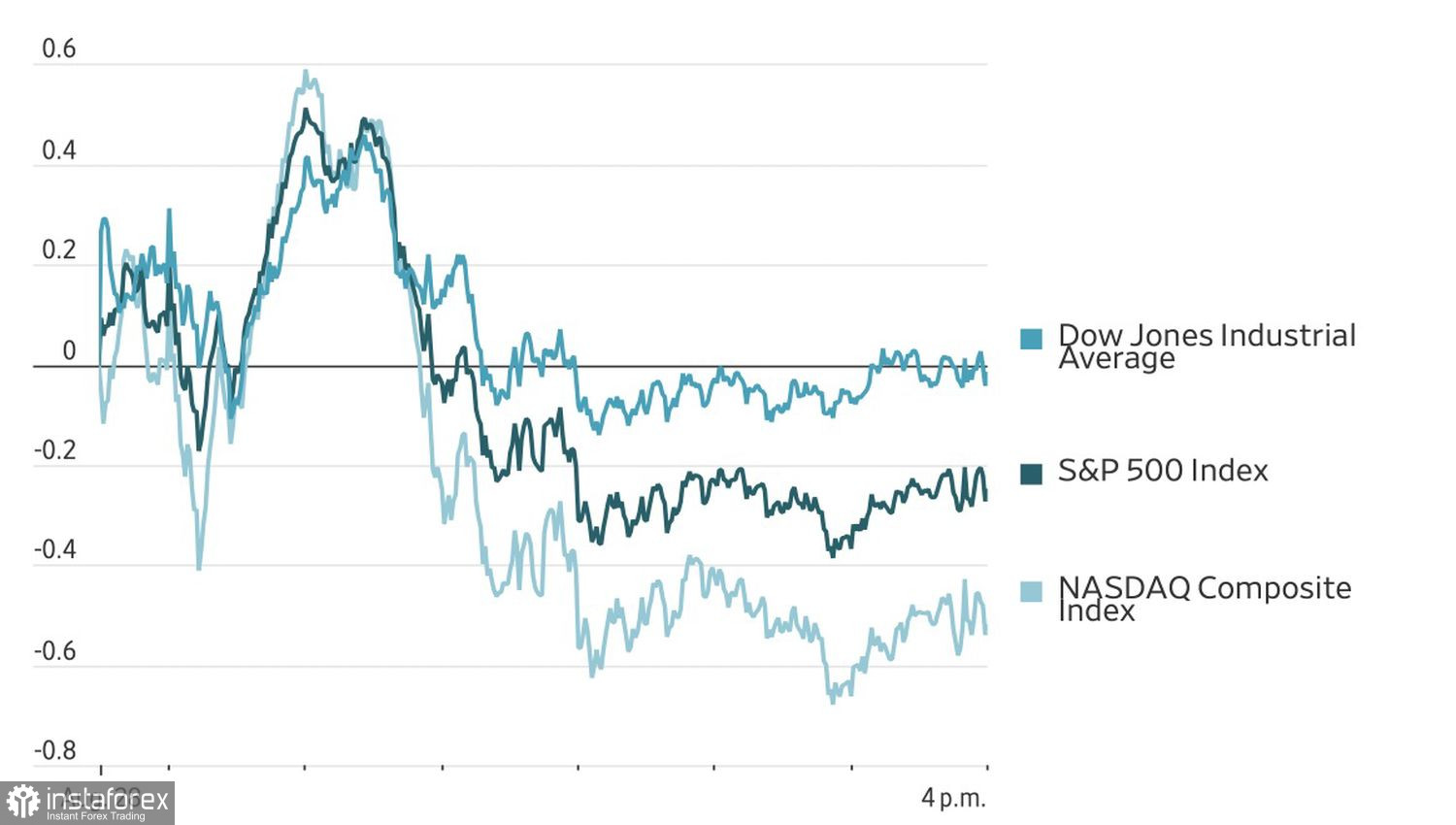
Slow and steady wins the race. However, the stock market, in light of the central bank leaders' meeting, seemed to test this adage literally. Indices dipped while Fed Chair Kevin Warsh spoke, rallied when he paused, and then slid back down by evening. The result was a modest drift in the S&P 500 instead of the usual fireworks that typically characterize individual past speeches at Jackson Hole.
Stock index performance
Formally, Kevin Warsh said nothing sensational. However, the market picked up on two of his comments quite clearly. First, he struggled to label financial conditions as restrictive. Second, the summer inflation data did not convince him of a sustainable improvement in the downward trend. The logic is straightforward: interest rates suppress inflation through expensive loans, and if loans are not becoming more expensive and prices are not cooling down, it means rates have not been tightened sufficiently.
The futures market reacted immediately: the probability of a rate hike at the September FOMC meeting jumped to 60%. Meanwhile, short-term Treasury yields increased, while long-term yields lagged behind. This indicates that the market is pricing in a more aggressive policy here and now but believes in disinflation over the long term. In essence, the Fed has received exactly the response it was hoping for.
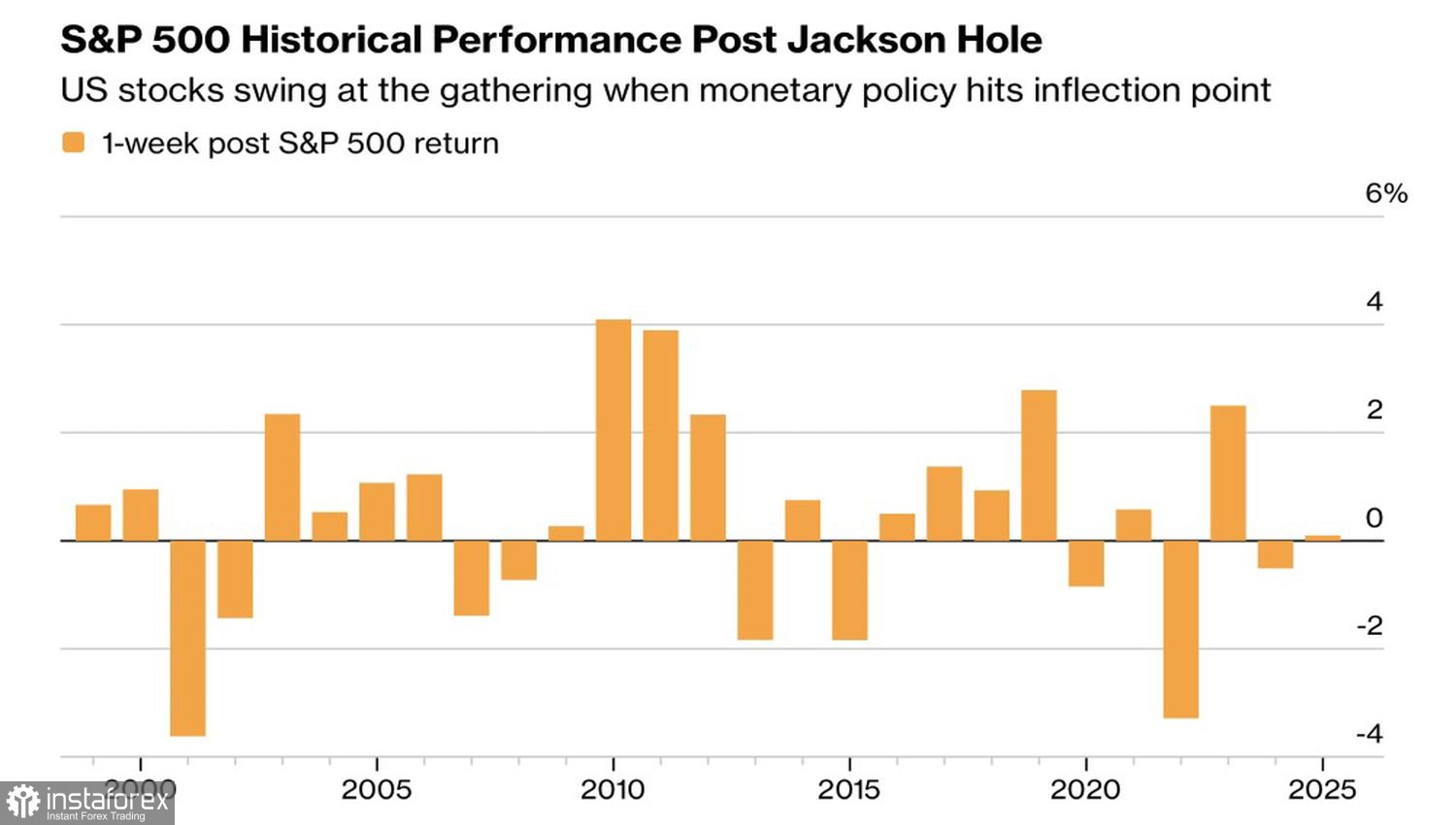
S&P 500 reaction to Jackson Hole
Meanwhile, corporate America is living its own story. Profits for S&P 500 companies in the second quarter rose by 53%, with sales up nearly 16%, according to LSEG data. Even without considering individual giants, profit growth was the highest since fall 2021, with companies raising their own forecasts nearly double that of those lowering them, marking a complete turnaround compared to 2025.
In reality, part of this celebration has been funded by tariffs. According to Apollo Global Management, renewed tariffs are providing a temporary but powerful tailwind to the economy, contributing over 4 percentage points to GDP growth in the third quarter. However, not all market participants are rejoicing. Nvidia lost 4.6% as investors weigh the rosy prospects of AI against the rising cost of capital amid the Fed's tougher policy. Adding to this is the decline in consumer sentiment according to the University of Michigan, making the picture less unequivocally bullish.
Thus, the market today is balancing between robust corporate earnings and the increasing likelihood of a more hawkish Fed. The risks are roughly balanced, but the poker face of the indices is unlikely to hold for long. Time will reveal who blinks first: inflation or investors.
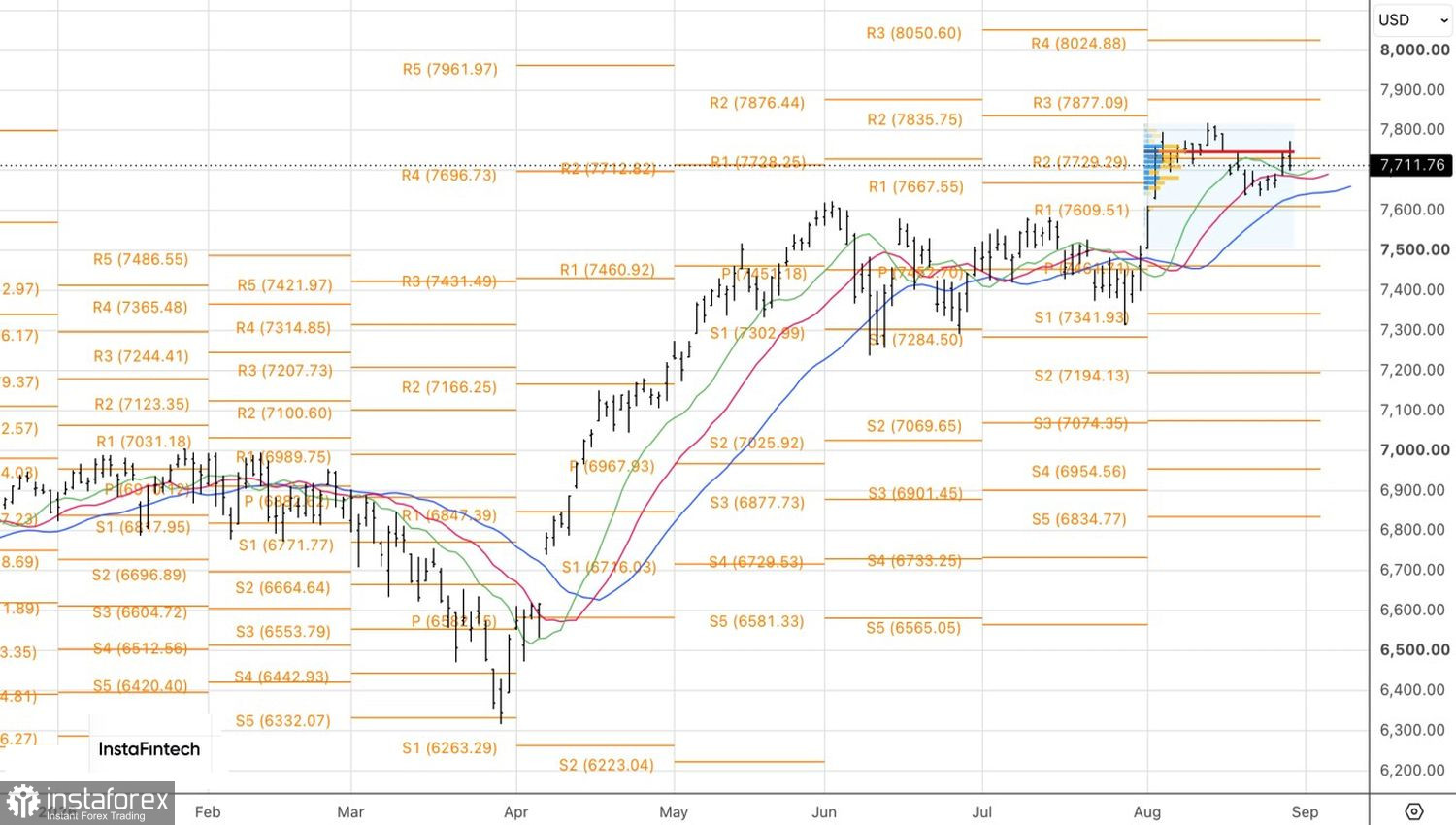
In my opinion, the current calm is deceptive.
Technically, the S&P 500 failed to test the fair value level of 7,750 on the daily chart. As a result, the risks of forming a 1-2-3 reversal pattern and a substantial correction have increased if this pattern is realized. A drop below 7,695 will trigger short-term selling.

