
See also


 03.04.2026 01:33 PM
While Donald Trump threatens, Iran strikes energy infrastructure in the Gulf. While the US president demands the Strait of Hormuz be reopened, Tehran is negotiating a protocol with Oman to charge fees for tankers transiting the strait — fees that could reach $2 million. Empty talk versus concrete steps. No surprise markets are shelving the idea of a quick end to the war, which contributes to a decline in EUR/USD.
The US dollar has strengthened by roughly 2% during the conflict, benefiting from its safe-haven status and the US being a net energy exporter. Over the same period, Brent has jumped by 50%. Clearly, the greenback is not keeping pace with oil. Why?
Performance of USD and oil prices
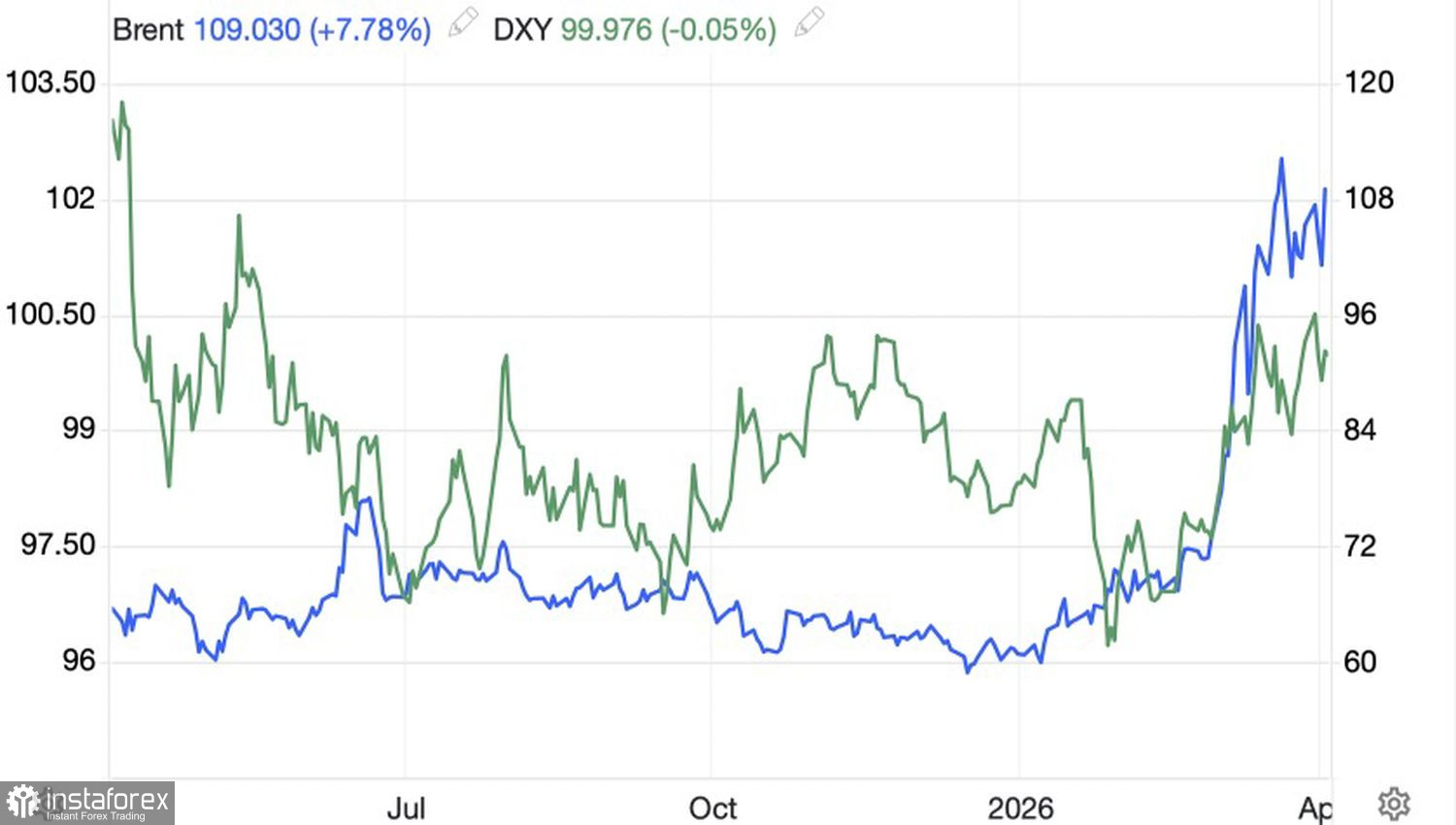
MUFG Bank cites three reasons. First is Trump's policy behavior. His swings during past trade conflicts catalyzed USD weakness. Today, the president alternately threatens and retreats, which does not build confidence in the dollar. At the same time, the White House's inability to decisively resolve the Middle East conflict is perceived as weakness. Previously, there was no real alternative to the petro-dollar for oil settlements. The Iran war has opened the door to alternatives. Investors are increasingly discussing a shift toward the petro-yuan.
The second reason is timeless. Before the Middle East confrontation, investors expected the Bank of England to cut the repo rate twice in 2026 and the ECB to hold interest rates through year-end. At the start of April, the futures market prices in about three ECB and BoE tightening moves by December. Derivatives, meanwhile, expect no hikes from the Fed. Money typically flows where rates are higher — yet it hasn't rushed out of the United States.
Finally, the third reason is the lingering market hope for a quick de-escalation and a return to the status quo. If that illusion persists, EUR/USD will struggle to break substantially below current levels.
US employment and unemployment dynamics
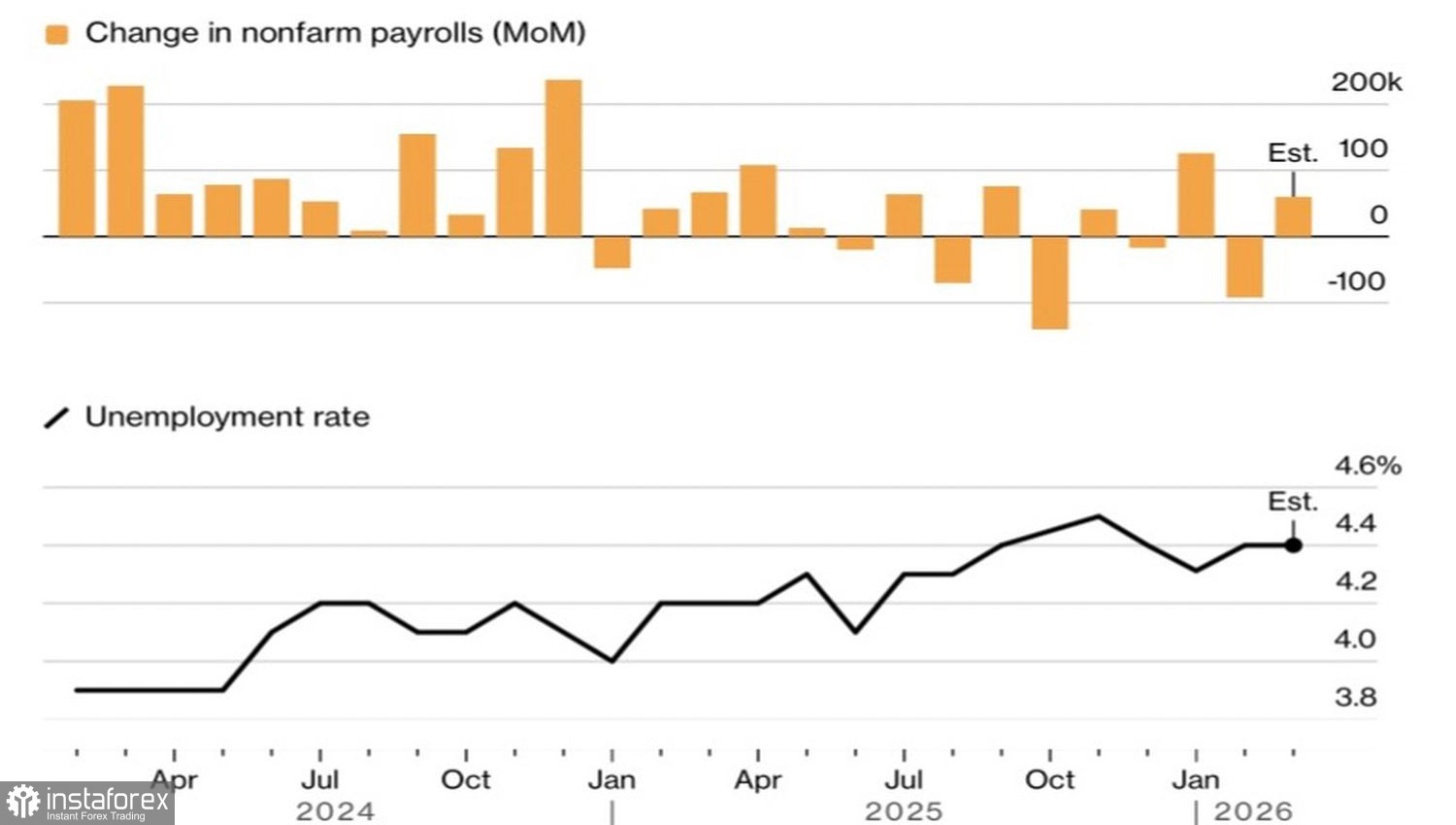
US labor data is unlikely to spoil the mood of EUR/USD bears. Past experience shows even a massive payroll surprise — a 92k drop in February — produced only a temporary dollar pullback. A miss versus the Bloomberg consensus of 60k for March would likely elicit a similar market reaction. Conversely, strong labor data would support further greenback gains against major currencies.
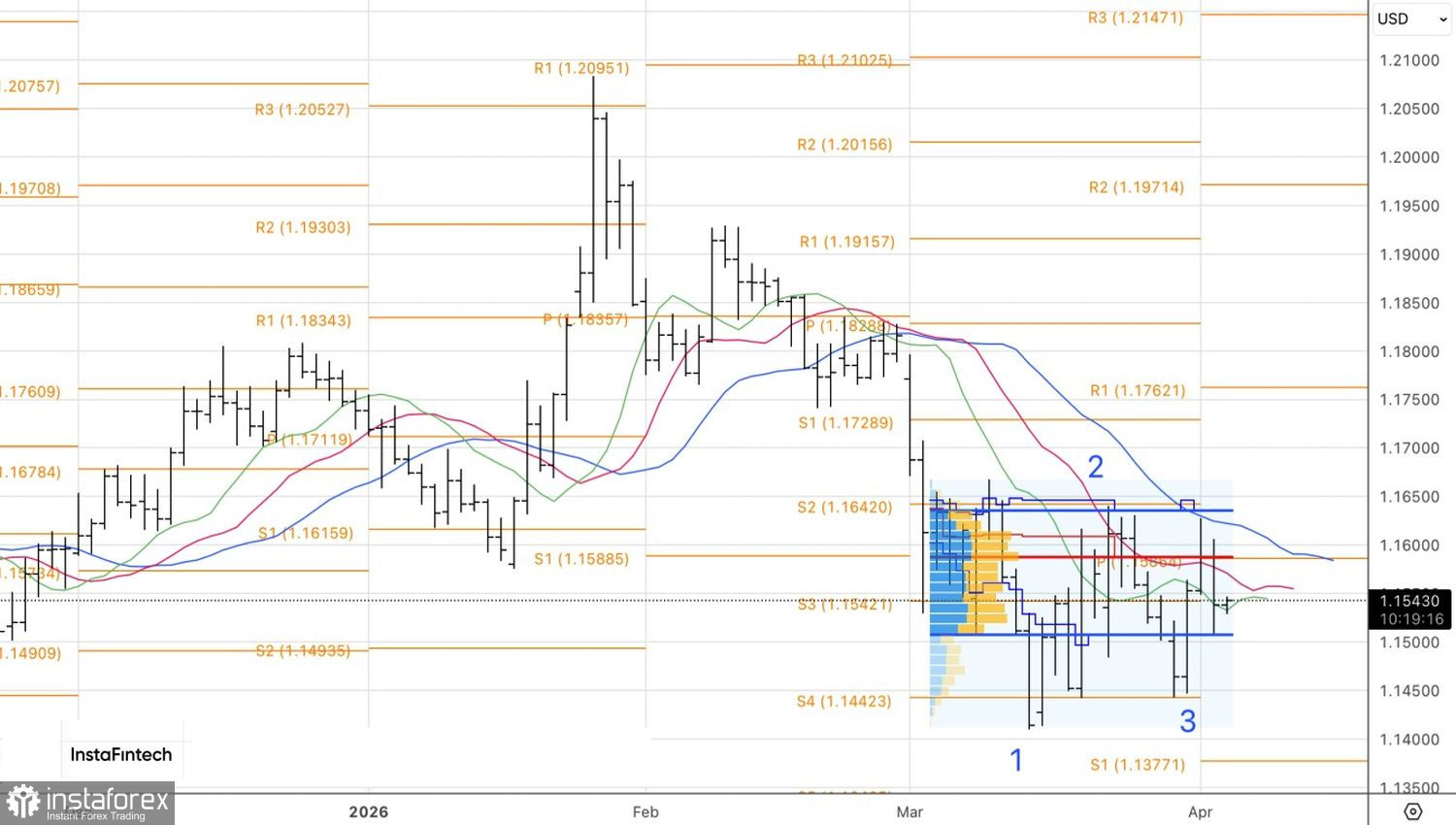
Technically, EUR/USD is consolidating within a fair-value range of 1.1505–1.1635 on the daily chart. A break below its lower boundary at 1.1505 would be a trigger to add short euro positions vs. the dollar. As an alternative strategy, consider going short on a rebound at fair value around 1.1590 or the pivot level of 1.1615.


