
See also


 28.04.2026 09:43 AM
How can the US stock market ignore the conflict in the Middle East? Investors keep asking that as the S&P 500 relentlessly rewrites record highs. However, there is another question: can the broad equity index afford to ignore the impressive — and often record — profit prints?
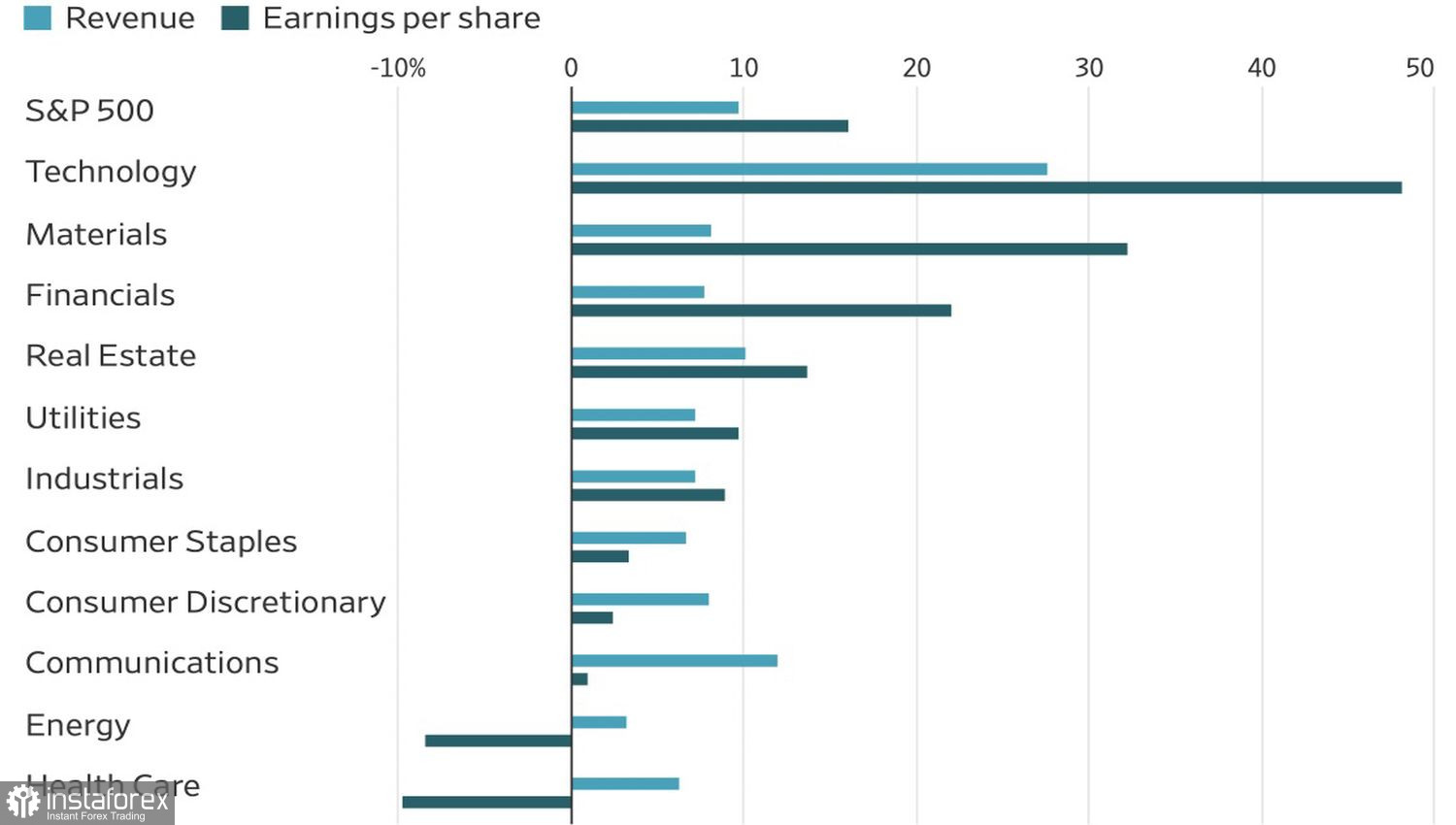
The economy is an important component of existing trends. If it deteriorates, and a recession or stagflation looms, the S&P 500 generally feels uncomfortable. Not this time. The drop in consumer sentiment caused by higher gasoline prices and eroded purchasing power among lower-income Americans contrasts with the upward trajectory of the broad index. At the heart of the rally are impressive corporate profits, especially in the technology sector.
Dynamics of revenue and earnings per share by S&P 500 sector
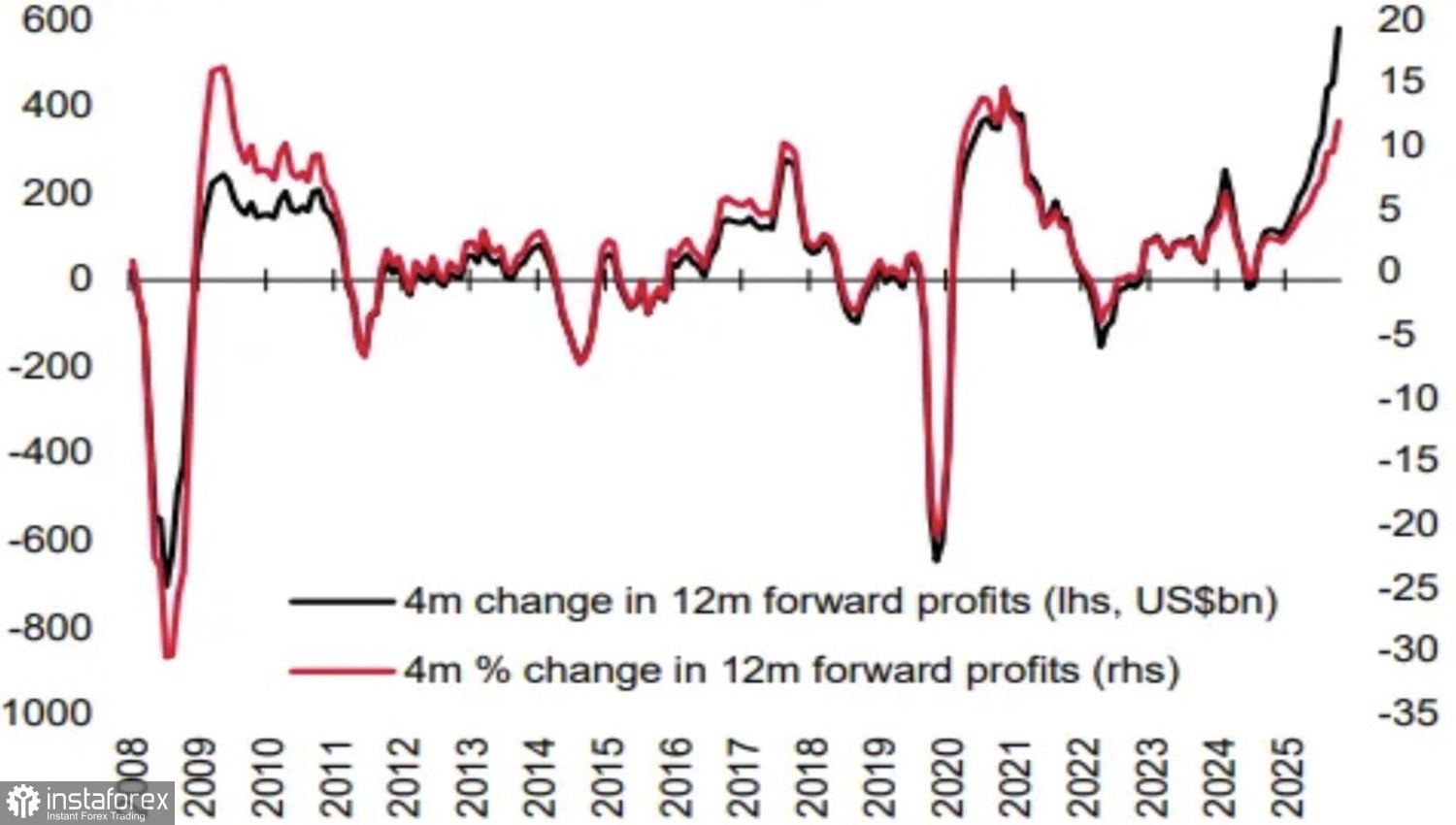
Societe Generale estimates that forward earnings for S&P 500 companies are about $600 billion higher than they were in Q4 — roughly a 12% revision over the past three months, the largest revision on record outside of post-recession rebounds.
The equity market can ignore the Middle East conflict as long as it does not escalate into a global confrontation. But it cannot afford to ignore blockbuster results from S&P 500 issuers.
Dynamics of forward earnings for S&P 500 companies
It is commonly said that the late-March rally was kicked off by US President Donald Trump's comments about talks with Iran aimed at a peace deal. In reality, that period coincided with big banks recommending clients buy deeply discounted, fundamentally cheap tech stocks.
As a result, NVIDIA's market cap hit a record $5.2 trillion — roughly $1 trillion more than second-place Alphabet. Meanwhile, four of the Magnificent Seven are due to report soon, fueling further buying interest in the S&P 500. FactSet data shows that index constituents are on track for net-profit margins at their highest level in 15 years.
In these conditions, the Middle East conflict naturally slips down the priority list despite rising media mentions. The US blockade of the Strait of Hormuz has proven a far more effective lever than airstrikes. Iran has fewer outlets for its oil and is forced to negotiate with the US.
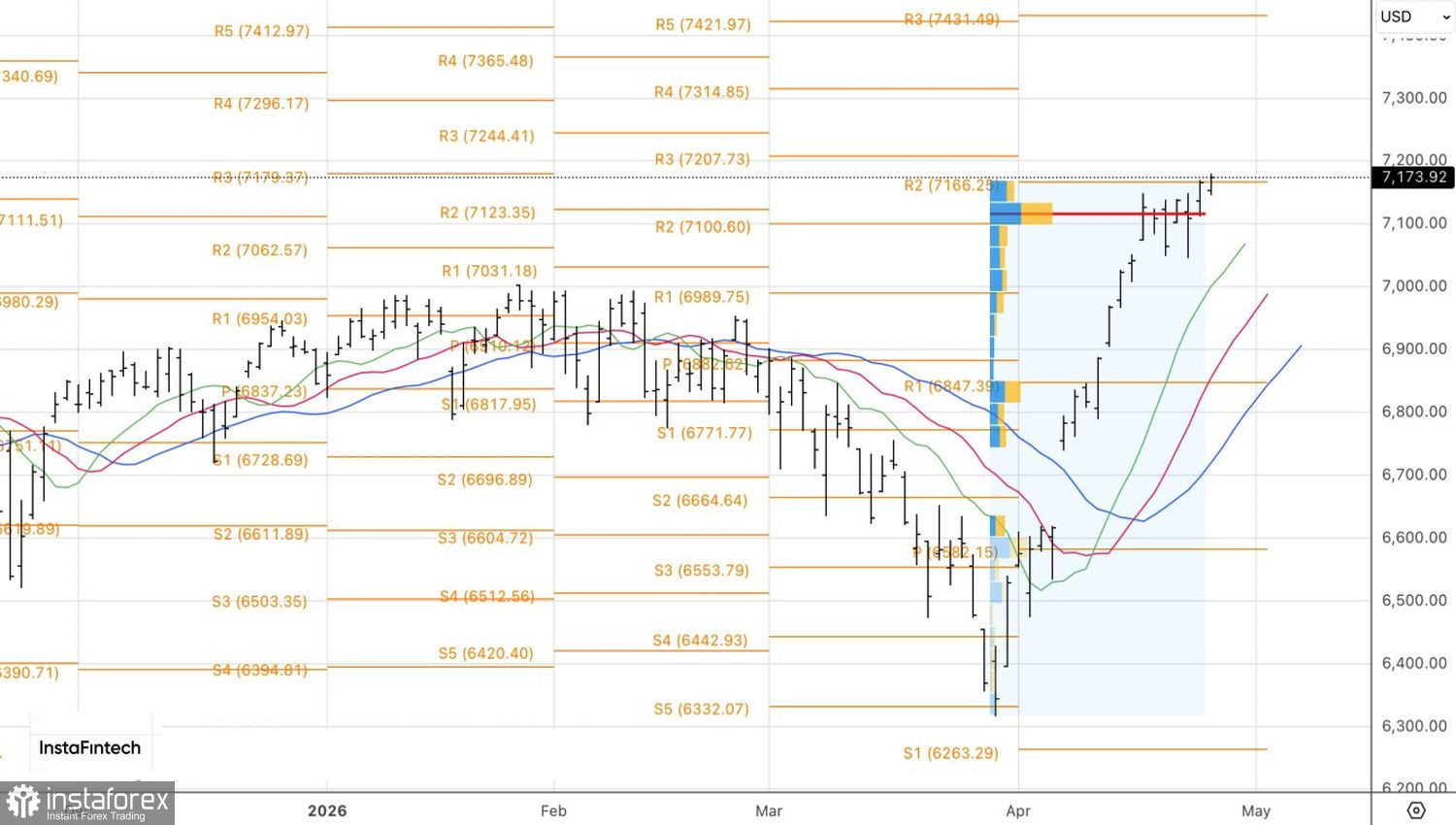
Technically, the S&P 500 is strengthening its uptrend on the daily chart, visible in price moving away from the moving averages. As long as the broad index trades above fair value at 7,110, bulls are in control. The bias should remain to the upside — stay long.
You have already liked this post today
*The market analysis posted here is meant to increase your awareness, but not to give instructions to make a trade.


