
See also


 29.07.2026 10:45 AM
The EUR/USD pair made another return to the 23.6% Fibonacci retracement level at 1.1395 on Tuesday and consolidated above it. The direction of price movement is changing almost every day, and sometimes several times within a single day. A move higher towards the 38.2% Fibonacci level at 1.1438 is possible today. However, the Federal Reserve's policy meeting could also trigger renewed selling pressure from the bears. The current technical picture clearly reflects the high level of global uncertainty affecting both the economy and financial markets.
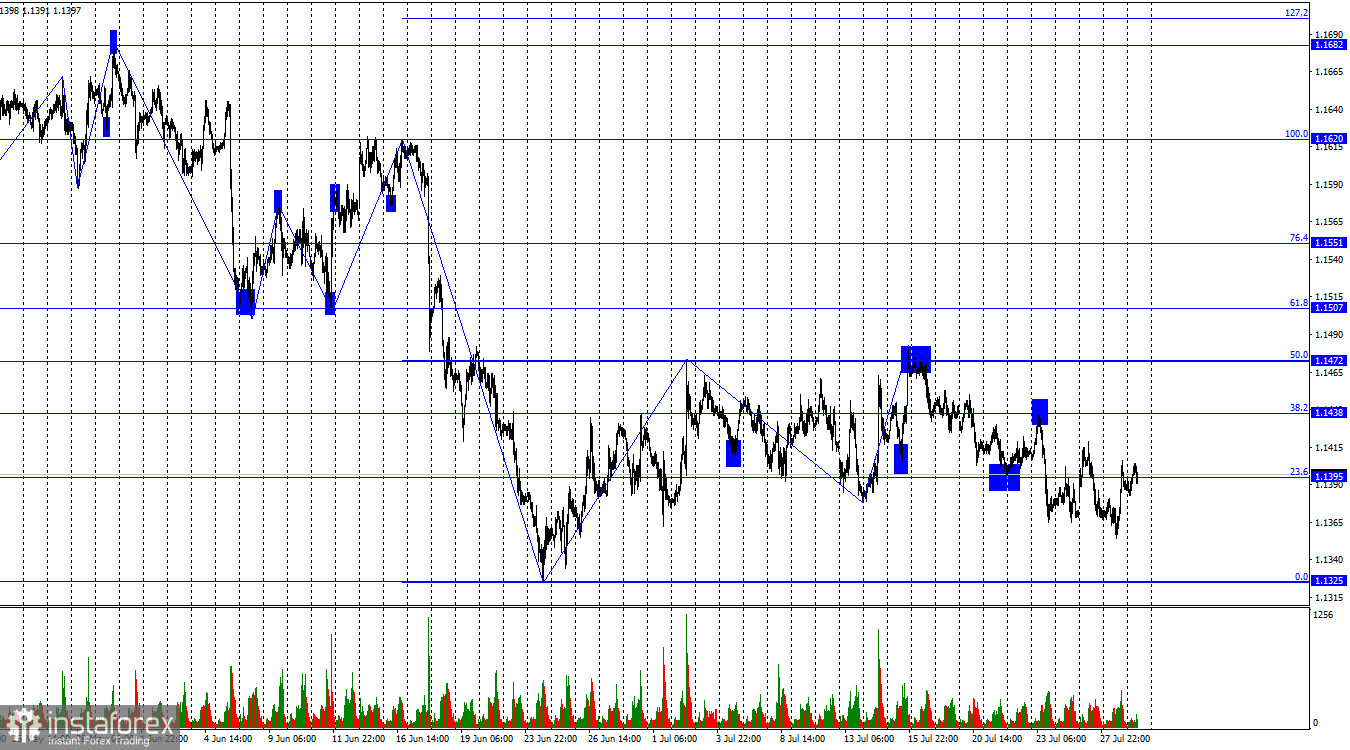
The wave structure on the hourly chart remains bearish, despite the prolonged (but weak) advance by the bulls. The latest completed upward wave exceeded the previous high by only a few points, while the most recent downward wave broke below the previous low. The geopolitical situation remains persistently negative, as Iran and the United States continue their blockade of the Strait of Hormuz, while no negotiations are currently taking place. A confirmed break above 1.1473 would signal that the bearish trend may have come to an end, but over the past month the bulls have demonstrated little more than persistent weakness.
The news flow on Tuesday was virtually absent. However, it became known that Iran had launched another strike against a US military base in the region. The ballistic missile was intercepted, but Tehran's latest actions could prompt Donald Trump to resume airstrikes against Iran. As a result, yet another week-long ceasefire may end in exactly the same way as all the previous ones. So far, events have followed the same pattern: reciprocal missile strikes, followed by a pause, an attempt to resume dialogue, and then renewed attacks. Traders no longer know how to react to the constantly changing geopolitical environment, although they could simply ignore it. Judging by the market's subdued activity, many participants appear to be doing exactly that. Overall trading activity has remained weak for more than a month. The EUR/USD pair continues to trade within the same range without attempting to break out. At present, neither the bulls nor the bears have a clear advantage.
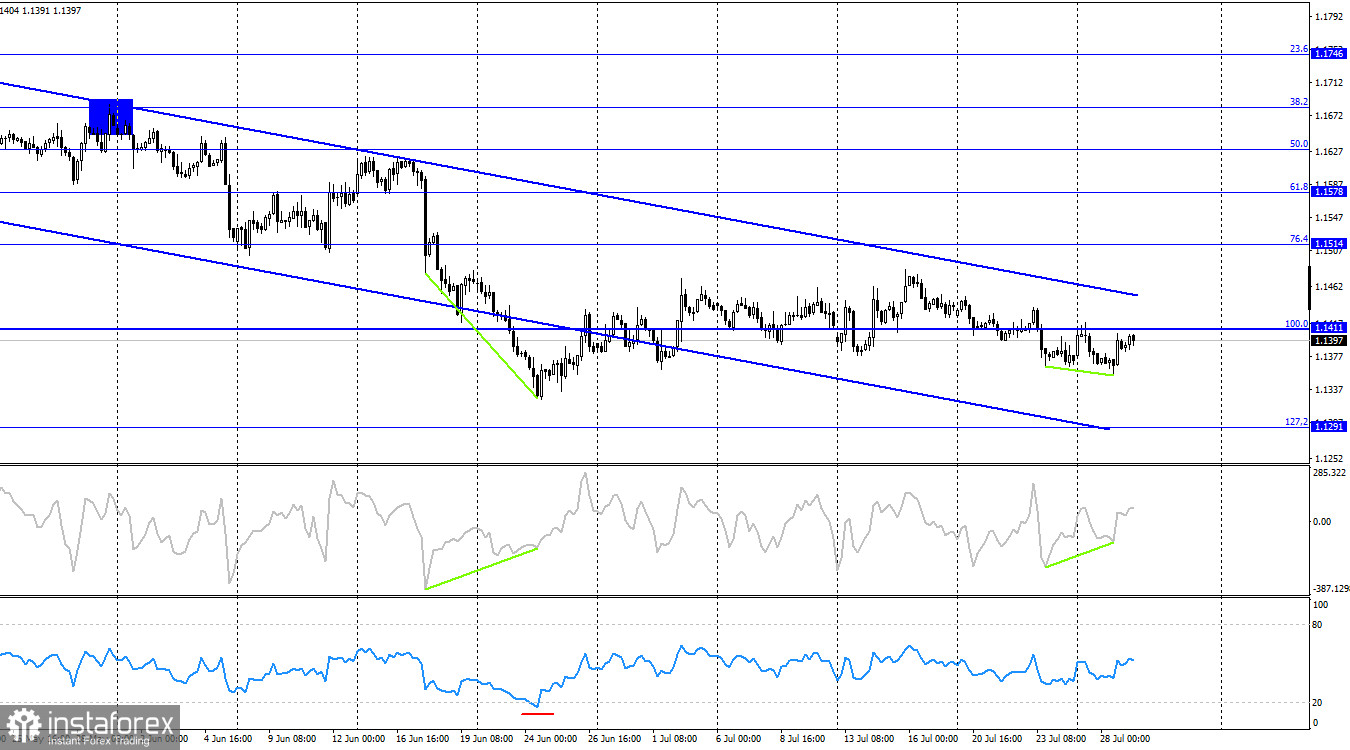
On the 4-hour chart, the pair remains in a sideways range. Consolidation below 1.1411 would support expectations of a further decline. However, price has recently been changing direction too frequently, while market participants have shown little conviction. A bullish divergence has formed on the CCI indicator, suggesting the potential for a modest recovery. The descending trend channel remains valid.
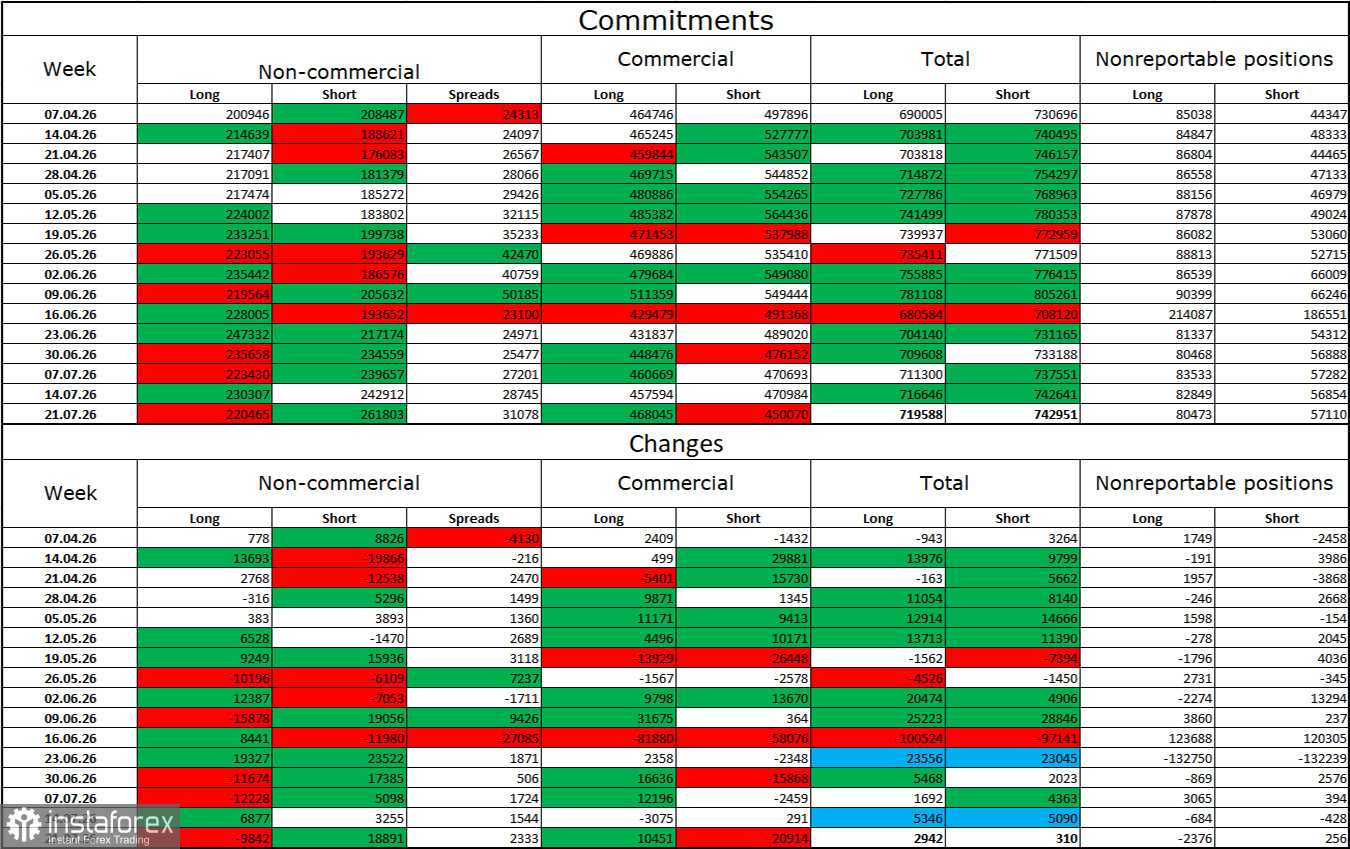
During the latest reporting week, professional traders closed 9,842 long positions and opened 18,891 short positions. Over the seven weeks spanning February and March, the bulls' overwhelming advantage disappeared as a result of the war in Iran. During the past seventeen weeks, positioning has become more balanced amid the fragile ceasefire and growing market hopes that the conflict will come to an end. Non-commercial traders currently hold 220,000 long positions and 261,000 short positions. The bears have once again regained the upper hand.
Overall, from a long-term perspective, large institutional traders continue to view the euro favorably. At the same time, it is undeniable that the wide range of global events witnessed in recent years continues to influence investor sentiment. In particular, the market remains focused on developments in the Middle East, where the conflict repeatedly appears to end only to resume again. Initially, the market ignored the announcement of the ceasefire, and later it also ignored the renewed escalation of the conflict. As a result, geopolitical developments are no longer the sole factor determining the direction of the US dollar.
United States
The economic calendar for July 29 contains two events, both of which are of high importance. Therefore, macroeconomic data may have a significant impact on market sentiment on Wednesday, although only during the evening session.
Long positions may be considered if the pair closes above 1.1395, with upward targets at 1.1438 and 1.1472. Short positions may be considered if the pair consolidates below 1.1395 on the hourly chart, with a downward target at 1.1325. Market movements remain subdued, meaning that target levels and trading zones are not reached in every case.
The Fibonacci retracement levels are plotted from 1.1620–1.1325 on the hourly chart and from 1.1411–1.1850 on the 4-hour chart.


