
See also


 27.08.2026 12:25 PM
Not all that glitters is gold, as the saying goes. On Wednesday, Wall Street starkly confirmed this. The S&P 500 index closed the session in New York virtually unchanged, while the tech-heavy Nasdaq 100 managed to stay in symbolic positive territory. Formally, the day seemed boring as everyone awaited the Fed's decision. In reality, however, all market attention was focused on one company—Nvidia.
Dynamics of Nvidia's forecast and actual data
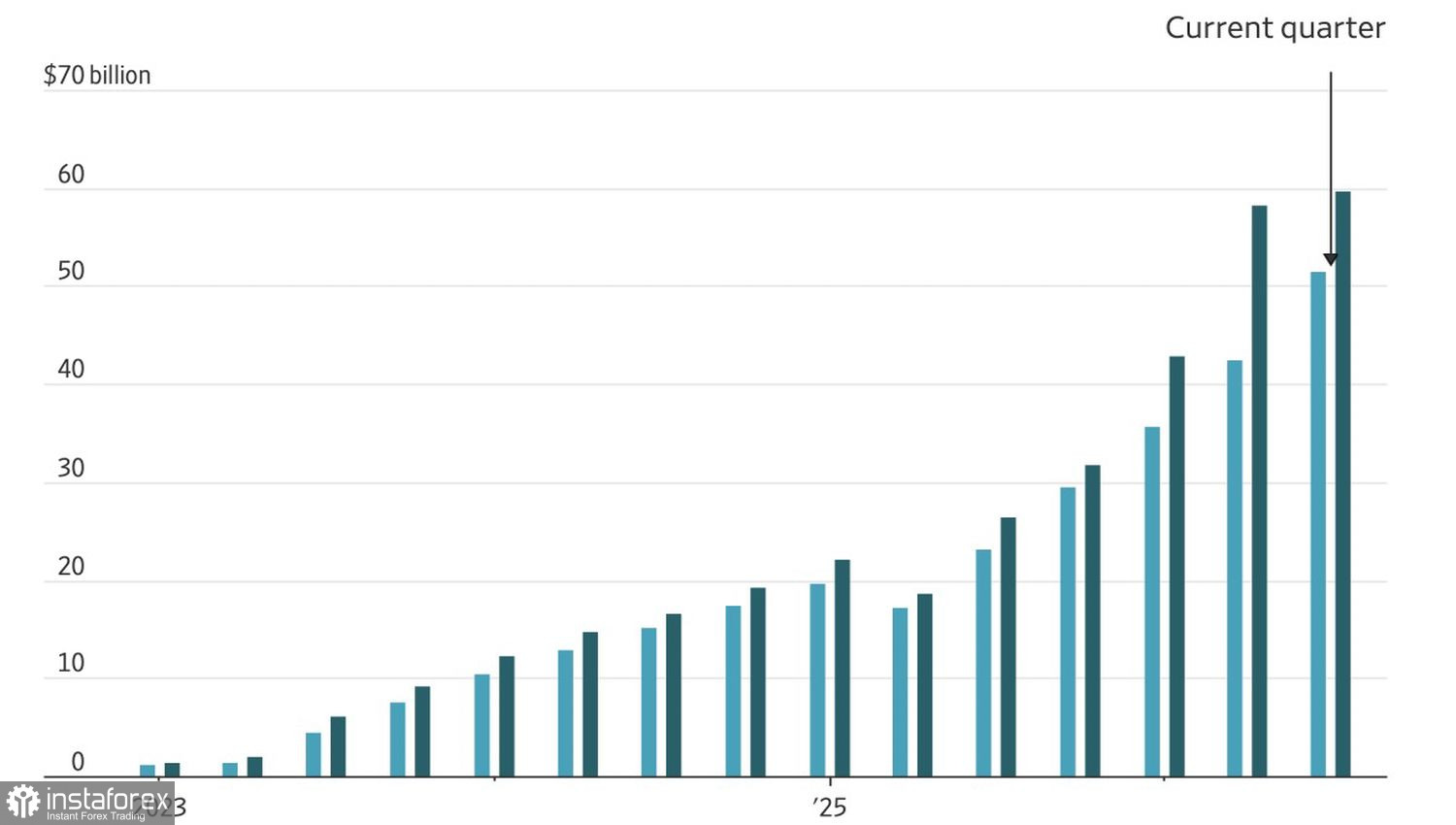
The chip manufacturer surpassed analysts' forecasts for the 15th consecutive time: net profit reached nearly $60 billion, which is 126% higher than a year earlier. The revenue forecast for the next quarter was set at $108 billion. This was also above Wall Street's consensus of $104.9 billion. The company's gross margin of 75% matched expectations. It seemed like a reason for triumph.
However, Nvidia's stock price fell by about 1% in after-hours trading following the report's release. Investors, it appears, have grown tired of being surprised. As noted by Infrastructure Capital Advisors, Nvidia's CEO Jensen Huang could be called the Chairman of the Federal Reserve for Artificial Intelligence—such is the company's influence on market sentiment.
At the same time, Nvidia's forward price-to-earnings ratio lags behind those of other major chip manufacturers and tech giants. The market is clearly concerned: the numbers are so enormous that there simply may be no room for further growth. The company is growing at least as fast, if not faster, than Intel and AMD, and its market position is only strengthening. Yet, Wall Street behaves as though a ceiling has already been reached.
Meanwhile, the gap between investments in artificial intelligence and its actual business returns continues to widen. Companies find it challenging to rapidly implement AI in production, and if investors' expectations are not met, some projects risk being halted. To close the gap, the market needs new examples of corporate AI tools with positive returns on investment.
Against this backdrop, investors received yet another signal: data on the core personal consumption expenditures price index. The metric rose by 0.2% month-over-month and by 3.3% year-over-year, remaining significantly above the Fed's target of 2%. The economy appears to be cooling, strengthening the arguments for keeping rates unchanged. However, the number of dissenters in the Fed committee at the next meeting might increase—the data paints a contradictory picture.
So, what will outweigh: the record reports from tech giants led by NVIDIA or the growing fatigue of investors from inflated expectations? For now, the stock market seems to prefer not to answer this question and simply waits.
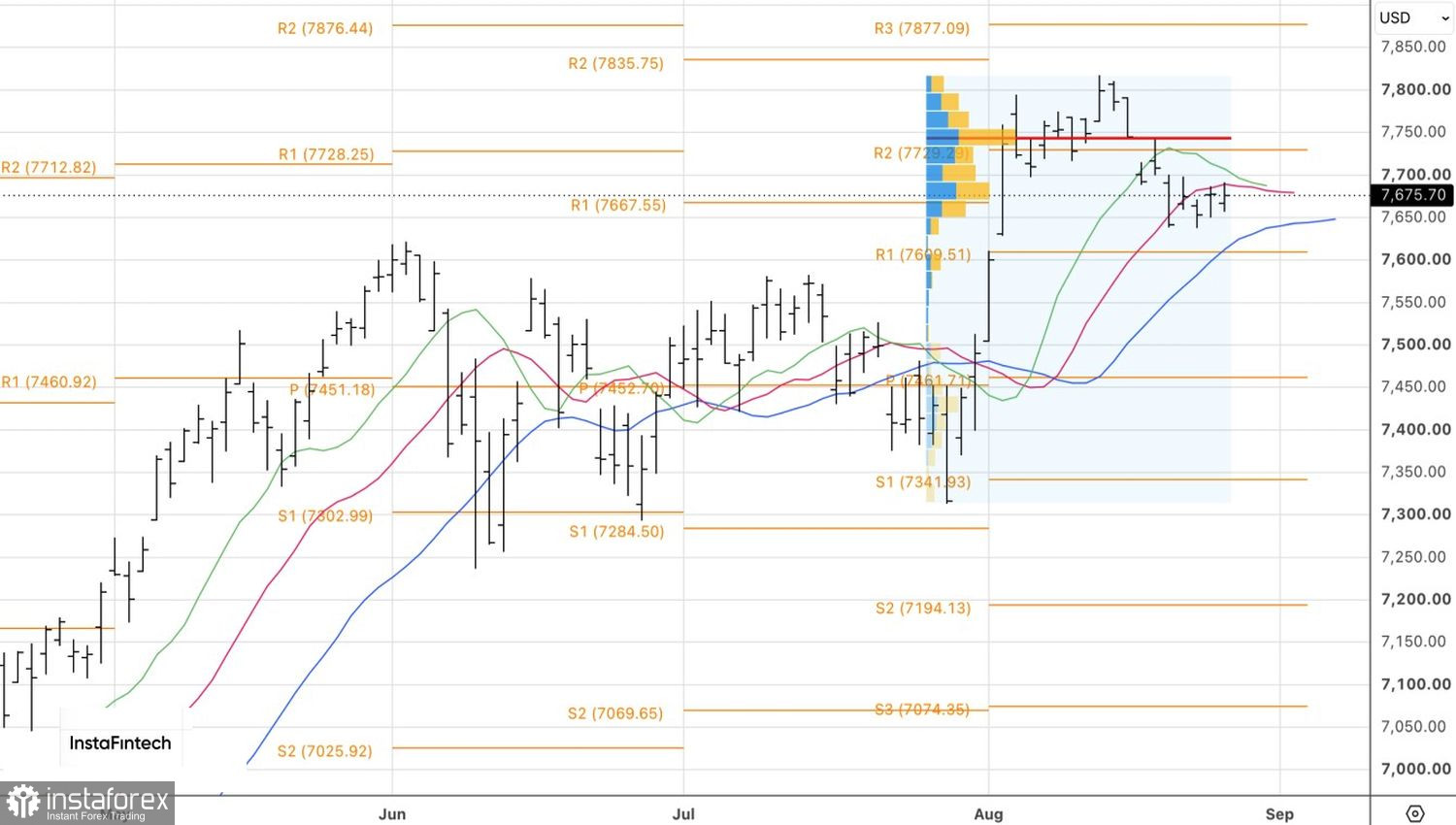
Technically, on the daily chart, the S&P 500 has yet to leave the bands of the sideways channel. The broad market index continues to trade within a narrow range of 7,635-7,700. The relevance of a strategy involving limit orders from its lower border for selling and from the upper border for buying remains intact.


